
Ylong
Date :
2018
Place :Yilong - China
Client :International competition
Project :Jean Marc Schivo & Lucilla Revelli

A Futuristic City
1. A new approach for the future development of Yilong district for 800,000 inhabitants provides for an aerial system of functions and services capable of ensuring broad functionality and mobility to its territory when all urban areas have been saturated. Energy Road is urban energy, urban nature, urban sociality.
Before the 21st century climate change panorama, the demand for sustainable economic growth of an increasing world population and consequent, essential new territorial realities, it is necessary to integrate the current eco-city concept with efficient and faster urban solutions implementation.
The Energy Road is based on the concept of Energy Just-in-Time, which provides:
E=MC2 Energy = Management City Complexity
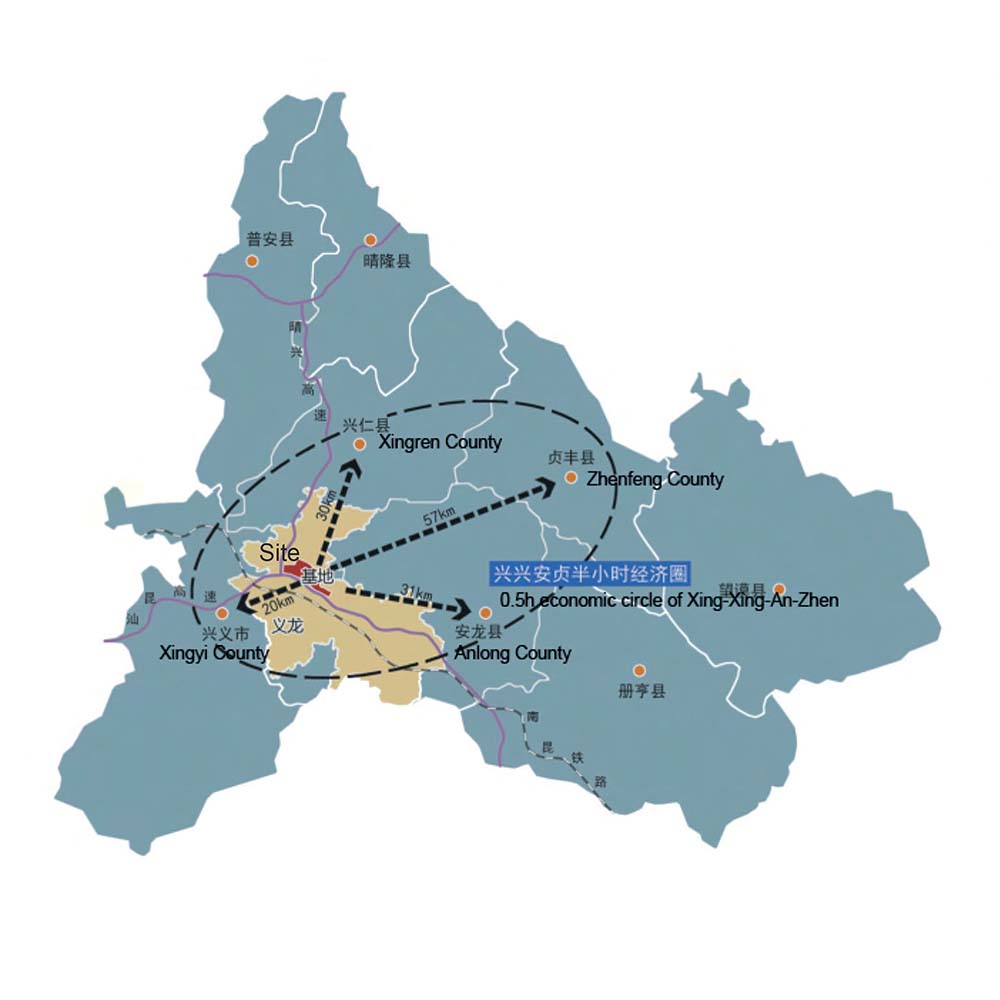
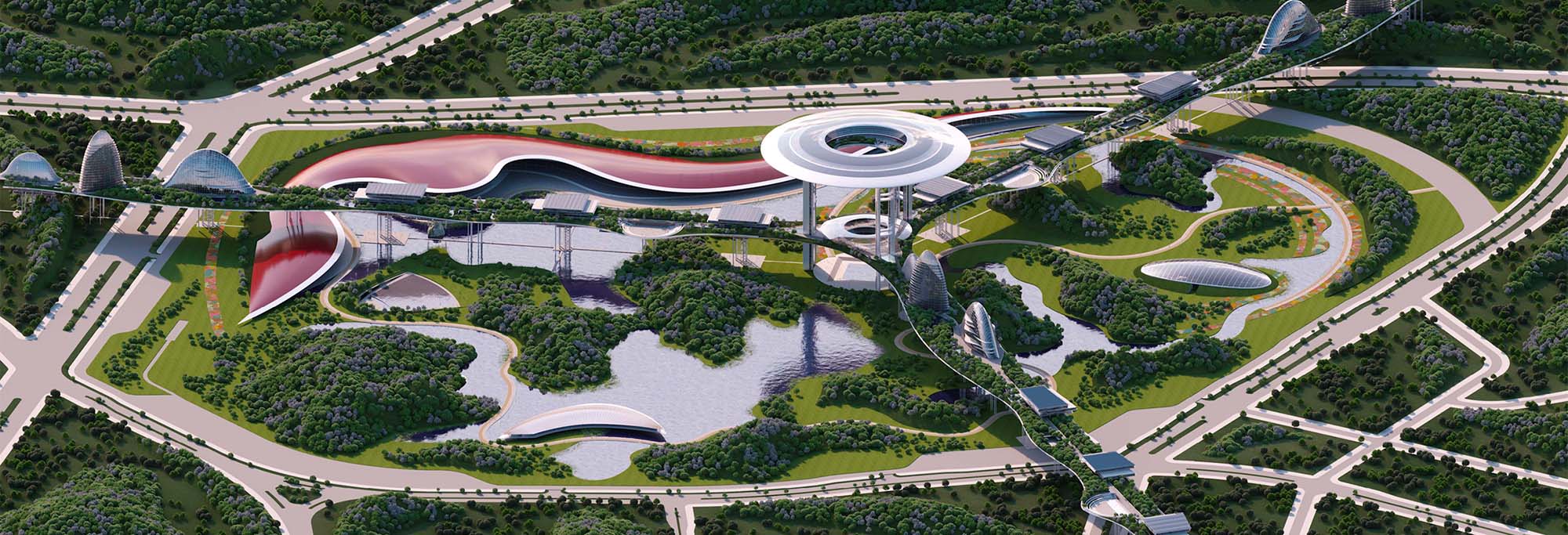
The energy road
An adaptable, flexible system that matches multiple climatic and territorial realities.
From the single unit to the complexity of the system.
An innovative platform strategically set to distribute renewable energy, oxygen, urban food and soft mobility: a mixed integrated functionalities for sustainable development.
Connecting with the local biodiversity system, Energy Road supports the city’s development processes, investing in areas of high urban density and reconnecting natural green spaces into an urban mechanic aimed at the construction of a unique territorial unit.
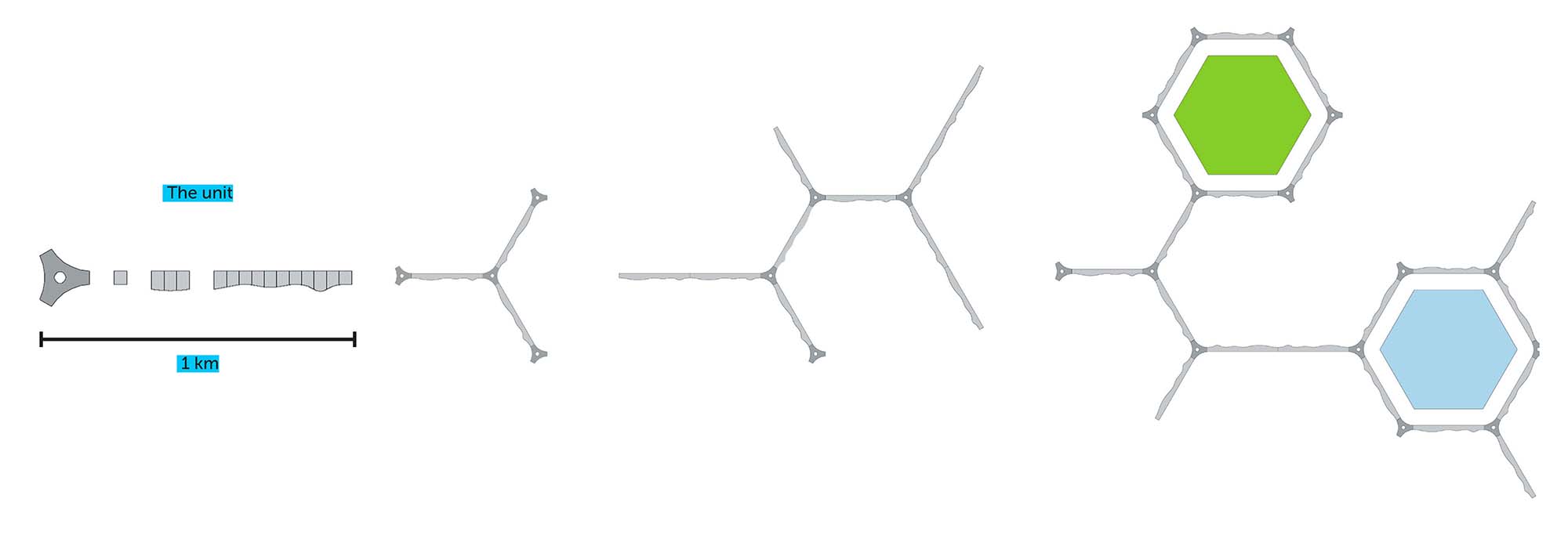
The unit: 1 km
An innovative platform strategically set to distribute renewable energy, oxygen, urban food and soft mobility: a mixed integrated functionalities for sustainable development.
Connecting with the local biodiversity system, Energy Road supports the city’s development processes, investing in areas of high urban density and reconnecting natural green spaces into an urban mechanic aimed towards the construction of a unique territorial unit.
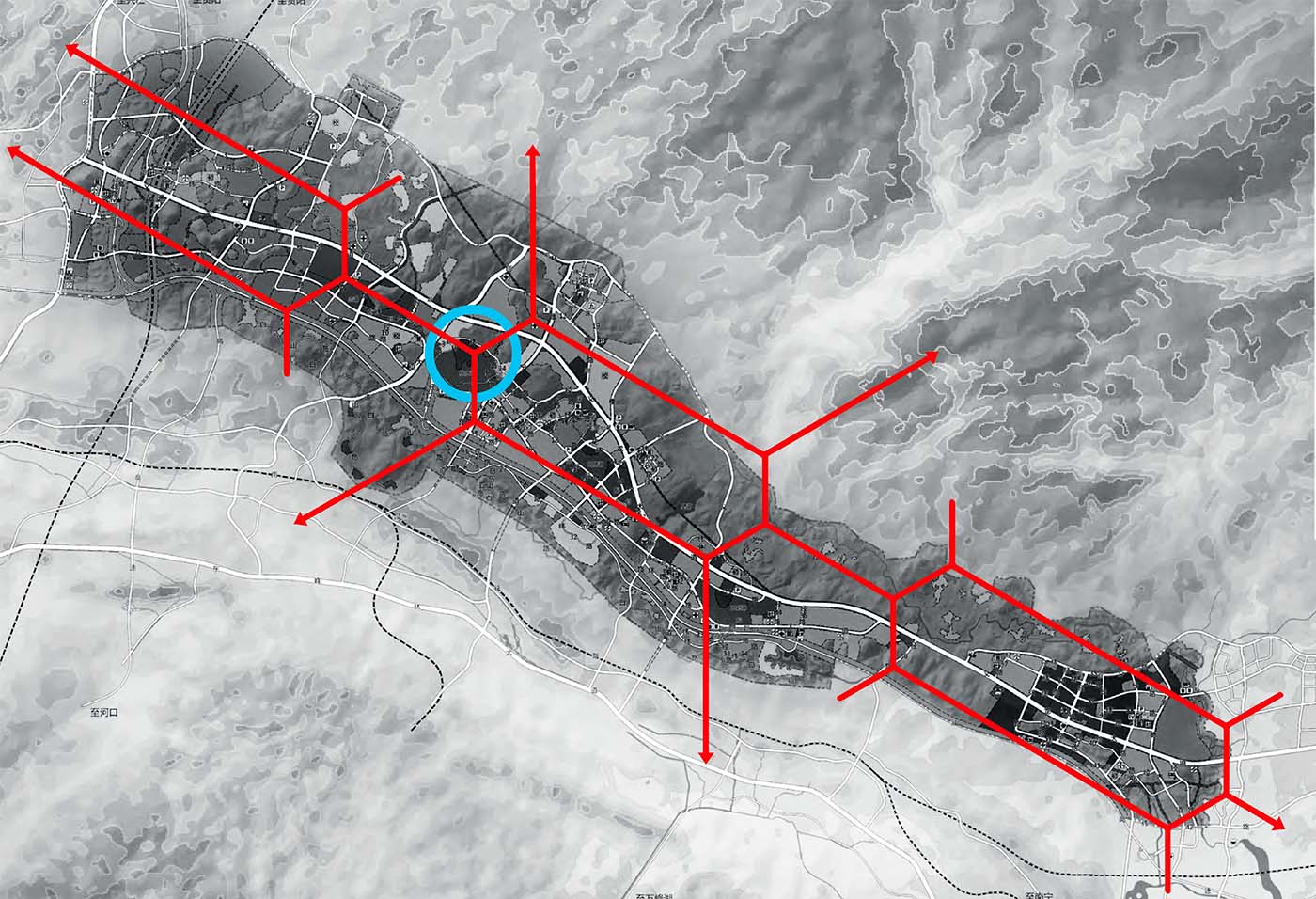
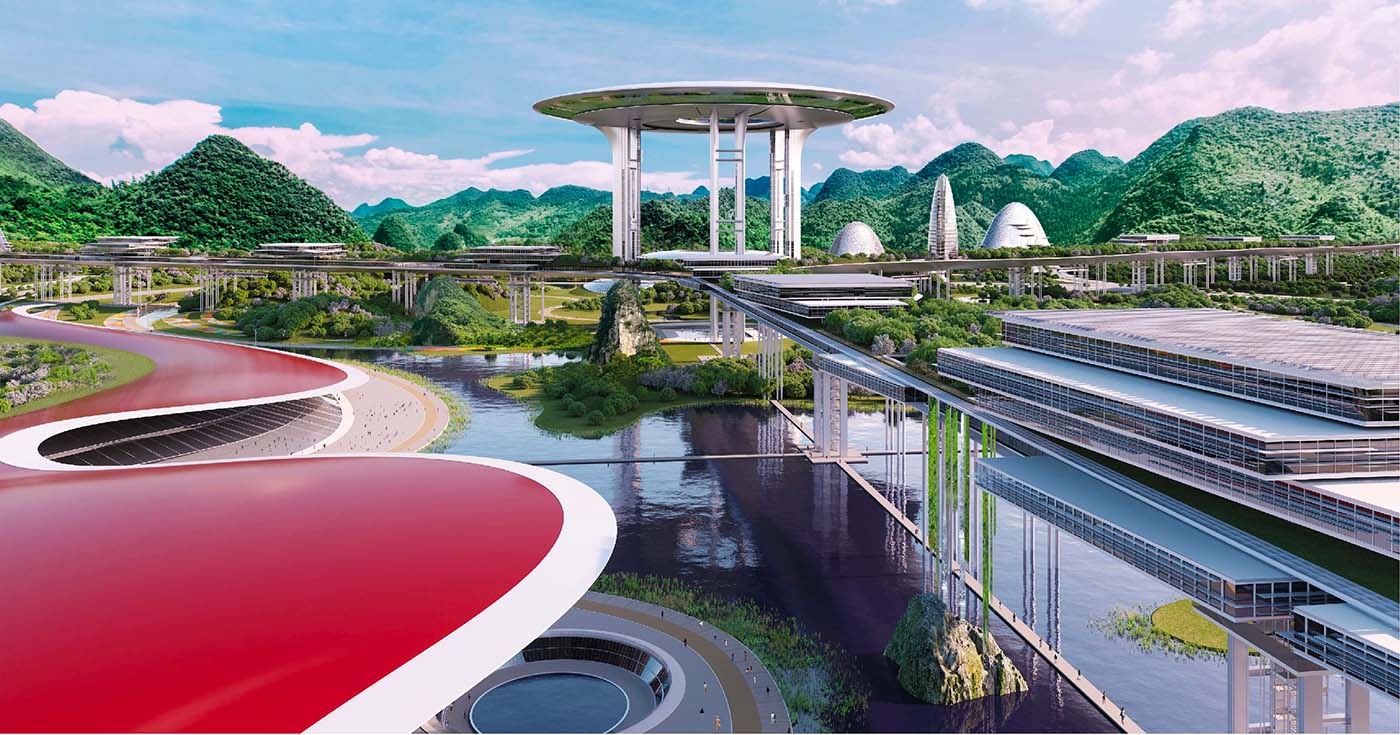
Energy road expects internal displacements to be carried out solely by zero-emissions or electric transportation vehicles, shared or personal, to be powered only by sustainable and renewable energy produced by the system. A series of underground and street level car parks are available for fossil fueled vehicles from nearby areas.
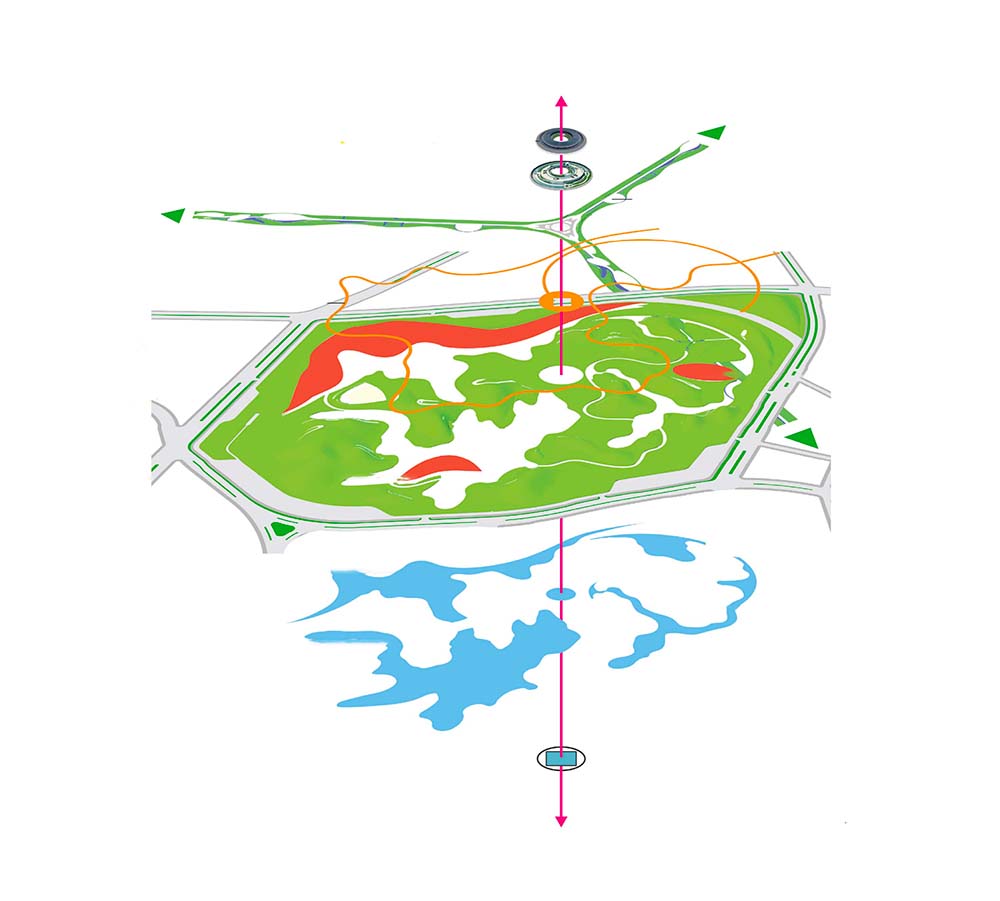
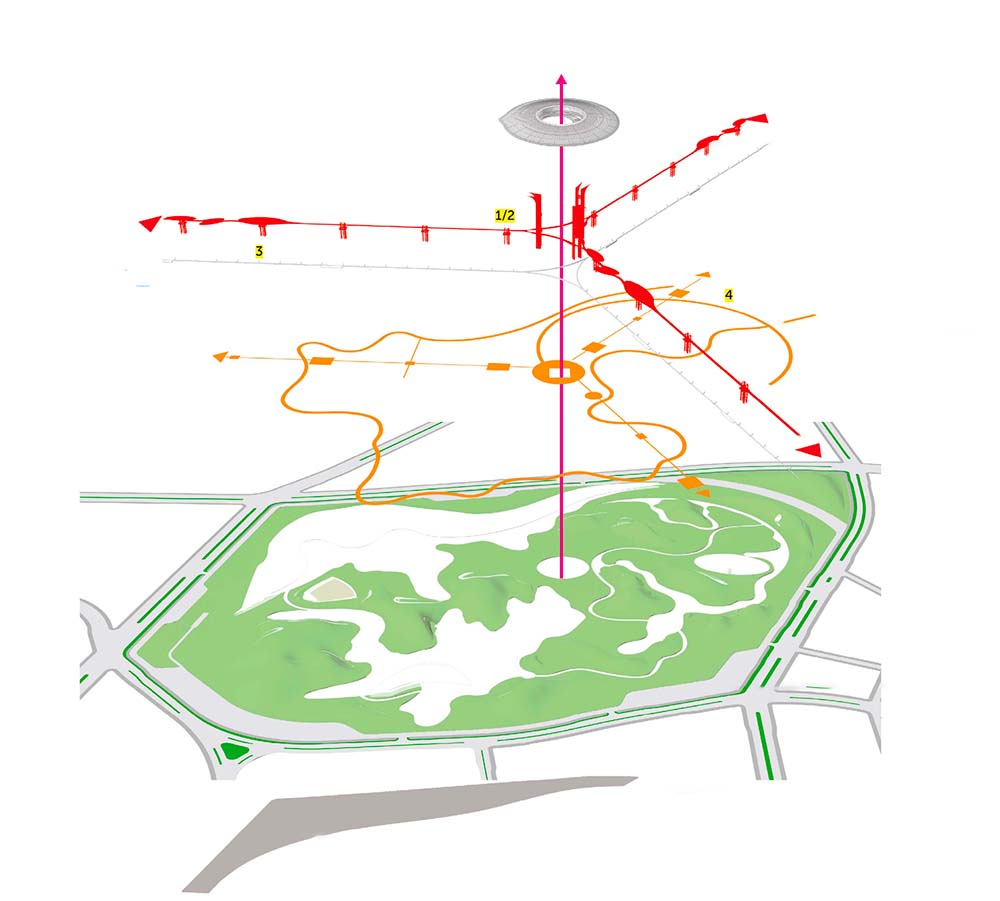
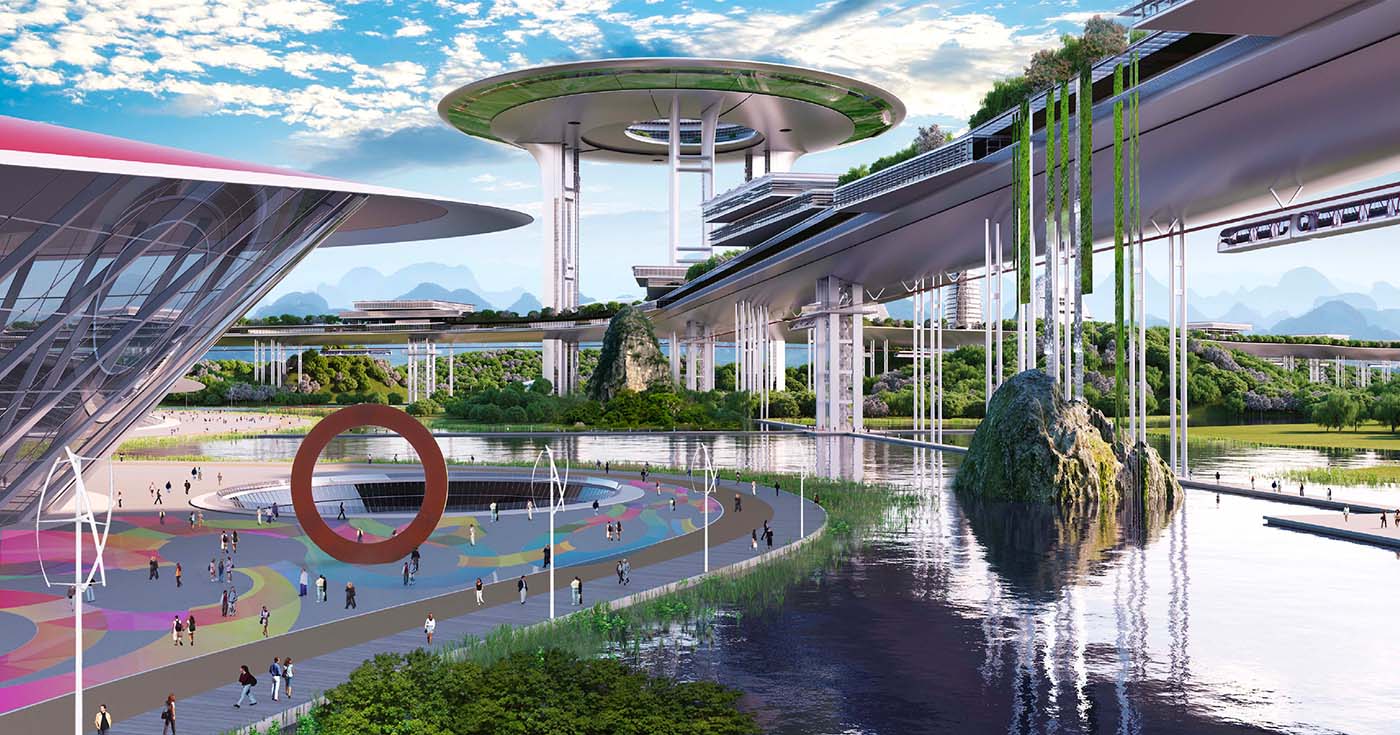
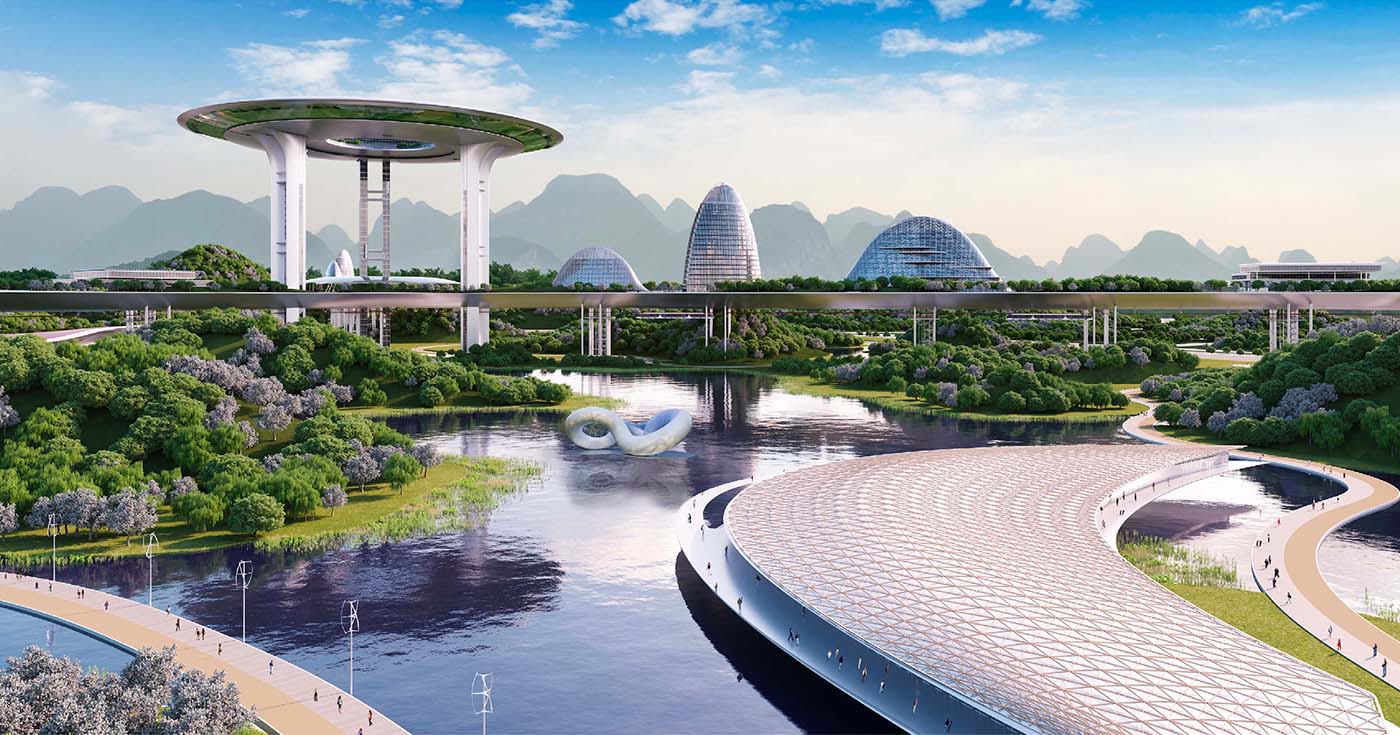
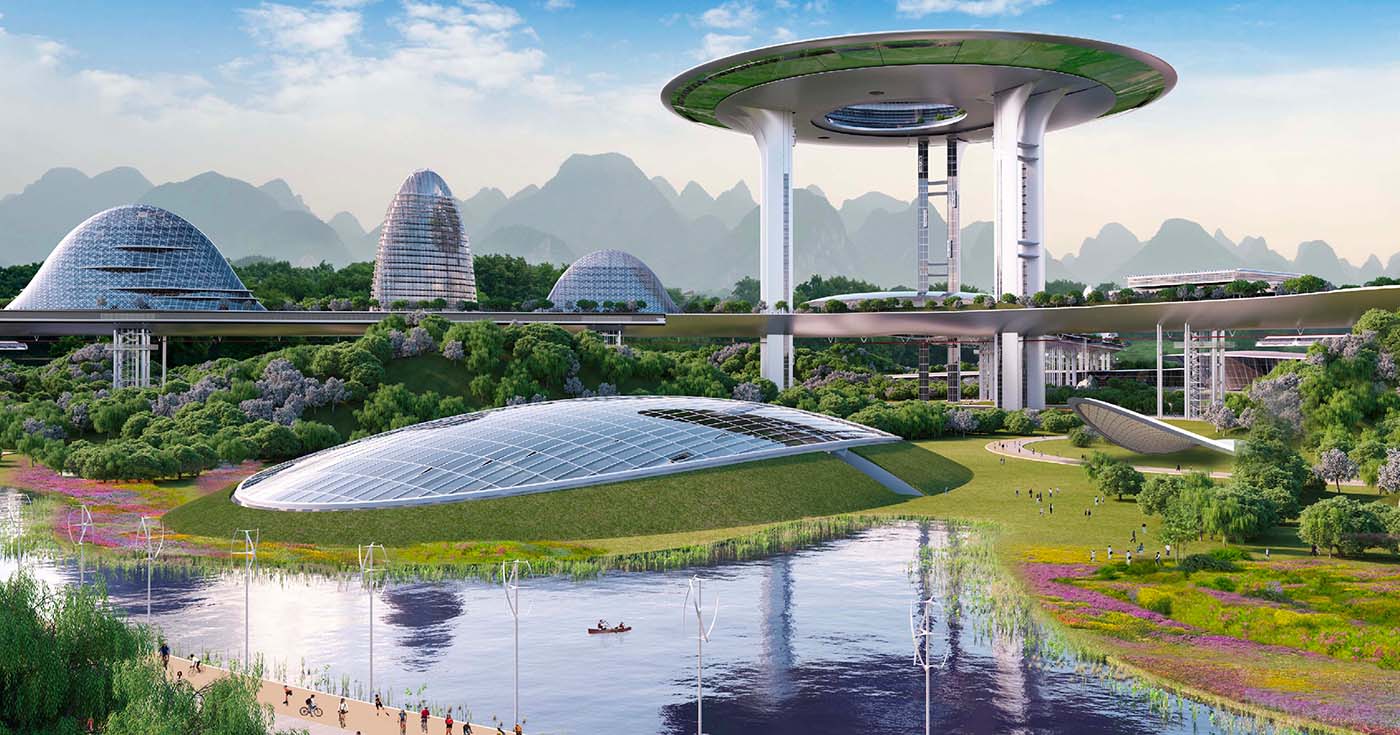
The system manages water cycle, production of compost and fertilizers for the green system and urban farming, both bio waste and waste cycles, the buildings’ energy efficiency, biodiversity and the environmental carbon footprint.
The system equally distributes both energy (Just in Time) and resources improving life quality, increasing oxygen production and the shared urban cultivable surface, reducing urban pollution, promoting urban biodiversity.