
Energy Tower
Date :
2008
Client :Marubeni Group
Structures :RFR – Paris
Bio architecture :RFR éléments – Paris
Study of the building envelope :Schüco
Lighting project :iGuzzini
Project :Jean Marc Schivo & Lucilla Revelli

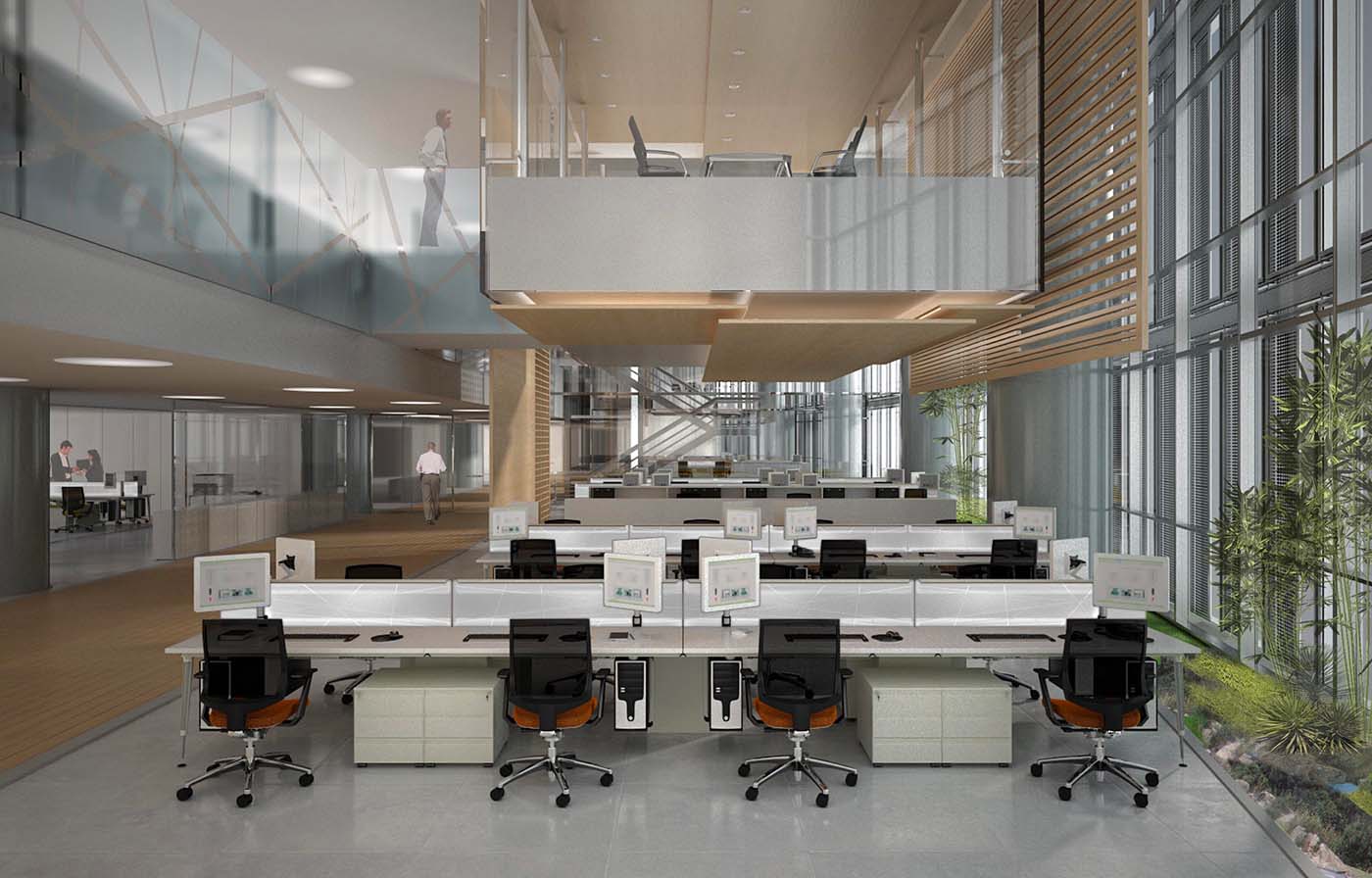
The tower has been planned as a combination of light, transparency, light technologies, and flexibility; furthermore, it is eco-sustainable. It has been particularly designed to host several functions and the company offices of one of the most important Japanese companies, adopting standards of great internal flexibility: some spaces can be converted to be suitable for new different requirements; wide empty areas can be used in the future for events demanding large spaces. Its shape is defined taking into consideration its orientation, weather conditions and light; its overall functioning is regulated by alternative energies. Water and vegetation are basic elements of the tower’s internal spaces as they regulate the different functions of the building. They contribute to create a system inside the tower, working throughout the entire 24 hours of the day, made up of offices, refreshment stores, business areas, hotels, a research centre, gyms, shops, meeting areas and, on top floors of the structure, a VIP lounge.
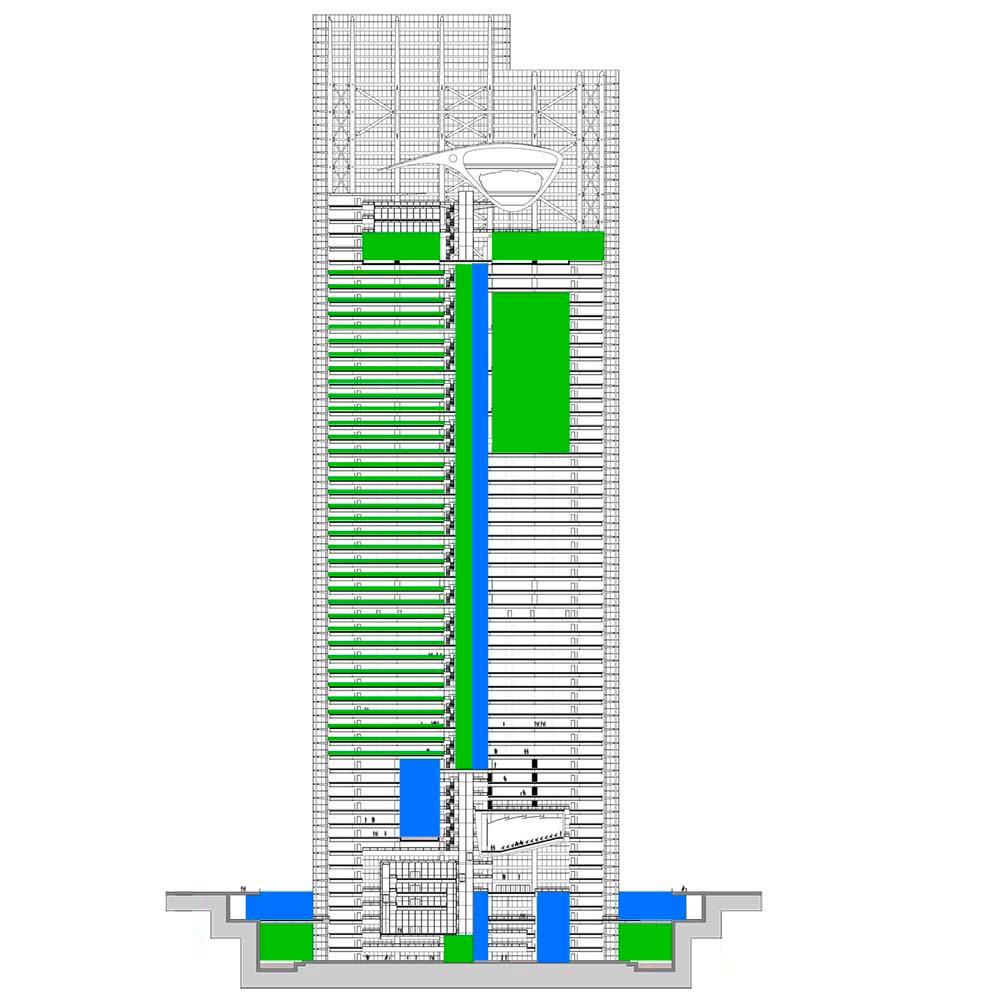
Inside the project
The tower was to represent a visible reference point in the urban landscape. The same happens at night by exploiting the possibilities offered by artificial light. The tower thus becomes an element of communication and adopts the most advanced technologies in lighting. Led and coloured lighting are used externally to draw the attention to special events or occasions according to the client’s needs.
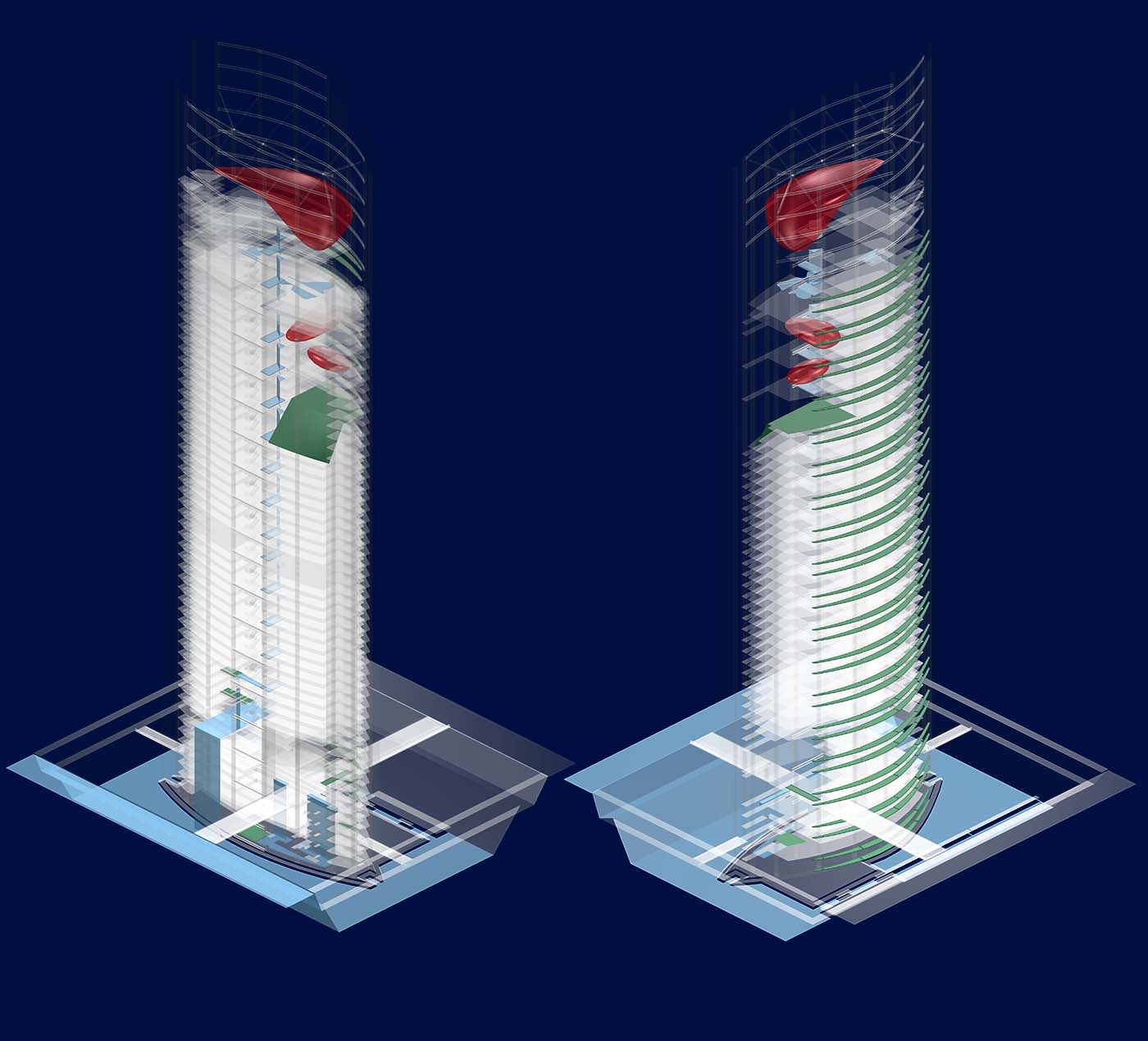

Translucent solar thermal collectors and versatile photovoltaic modules allow floor-to ceiling, large-scale integration into the façade. Solar energy for building cooling can be used efficiently thanks to thermal collectors integrated flush with the façade. The thermal energy captured by the collectors is converted into cold water by the absorption cooling unit and is used directly for air conditioning. Solar cooling allows solar energy to be use almost immediately to cool the building. This considerably reduces the amount of primary energy used for air conditioning.