
Pedestrian Bridges
Date :
2021
Place :Paris
Client :Artelia Group
Project :Jean Marc Schivo & Lucilla Revelli
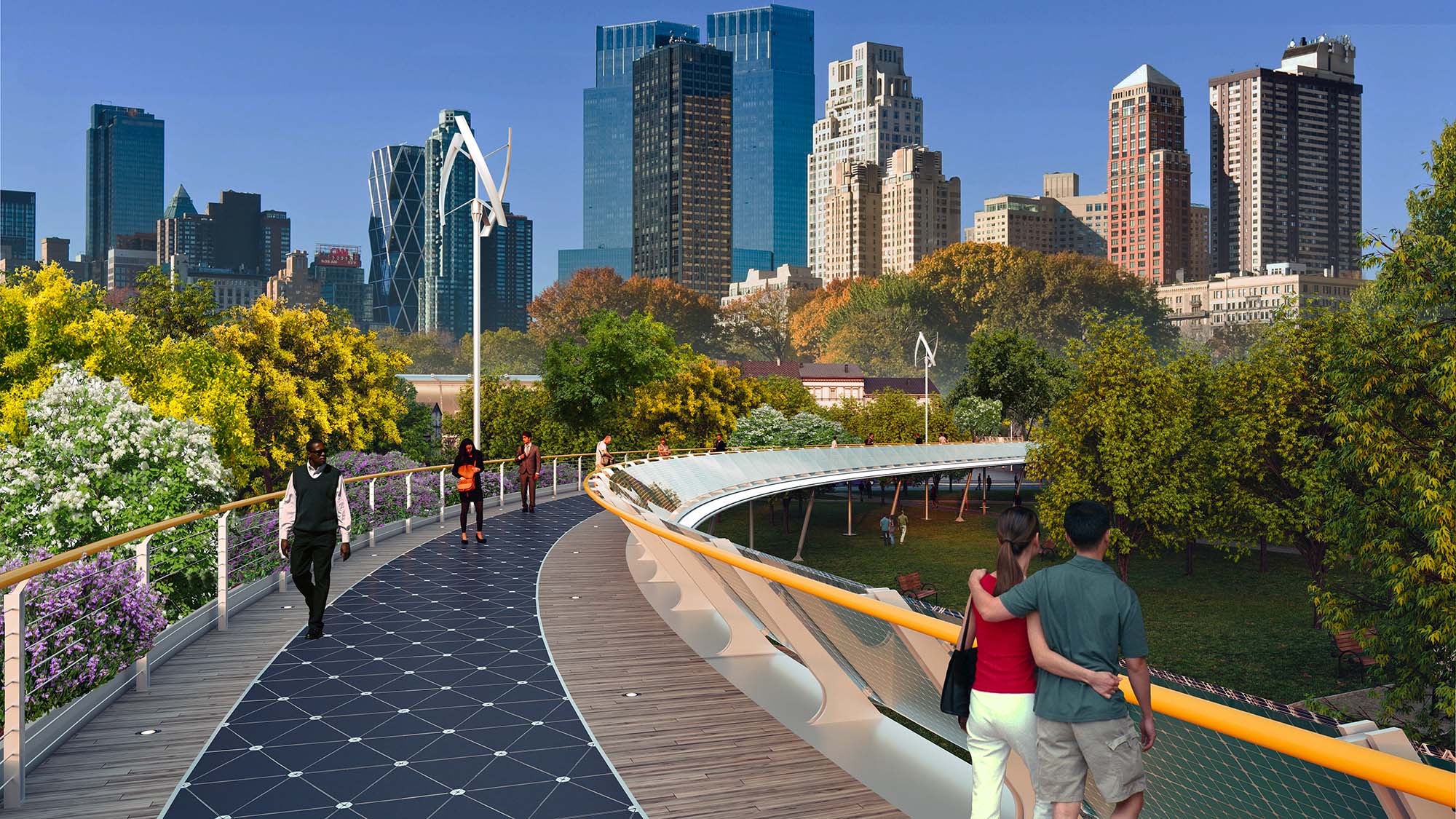
Contact Green pedestrian bridges system
Already at the end of the 19th century, the large cities of the world, and Paris is an example of this, set themselves the objective of developing new, safer and faster models of air mobility to create alternative systems to what would soon be the future clogging of urban roads, two-level railways, aerial subways, mobile pedestrian paths and more. Today, some architects have suggested the possibility of using urban roofs for alternative pedestrian traffic. This new approach is well exemplified by the recovery of the New York Green line.
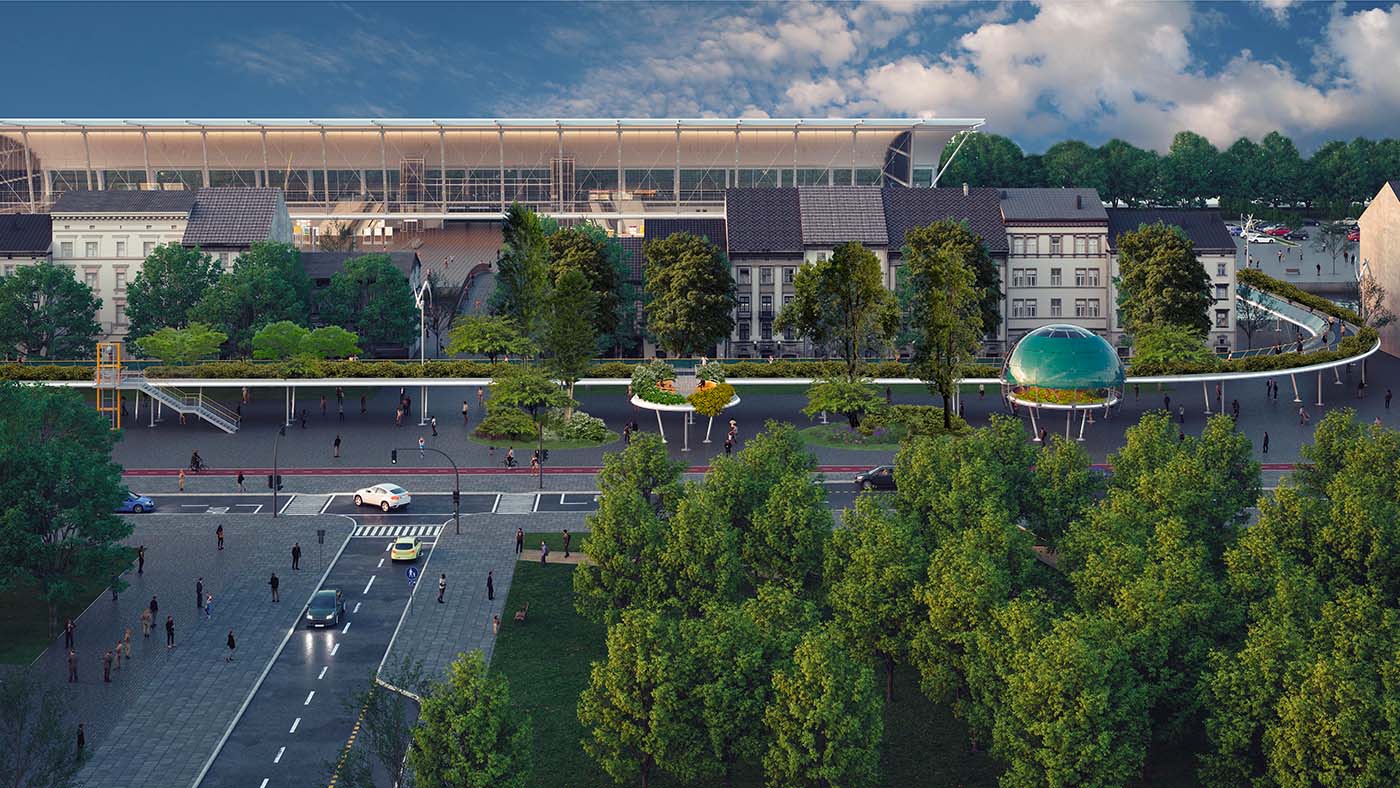
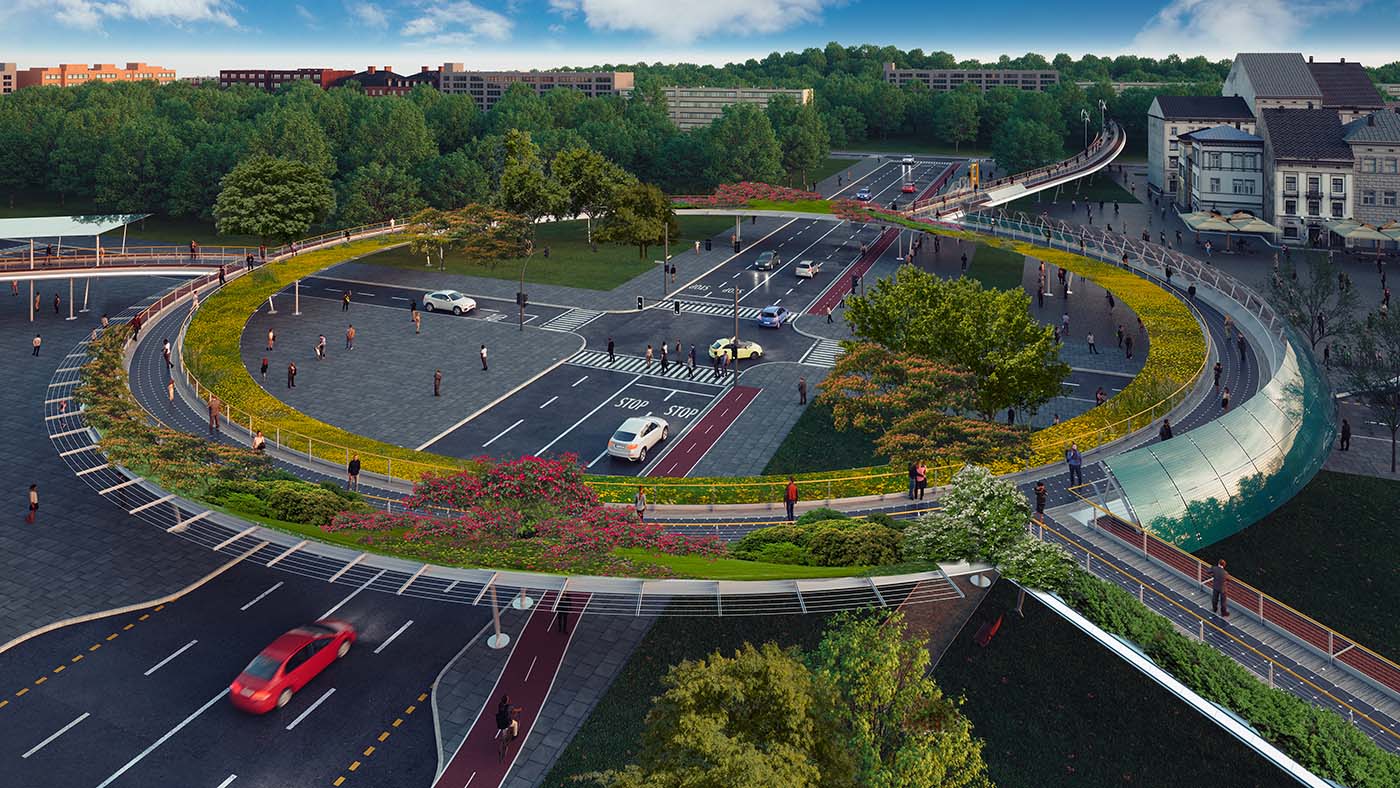
The Contact Green system takes up these concepts to develop urban routes in which nature, renewable energy and sociality can be brought together in a modular structure, allowing the user to enjoy new environmental realities and potential.
Restoring freedom to urban greenery
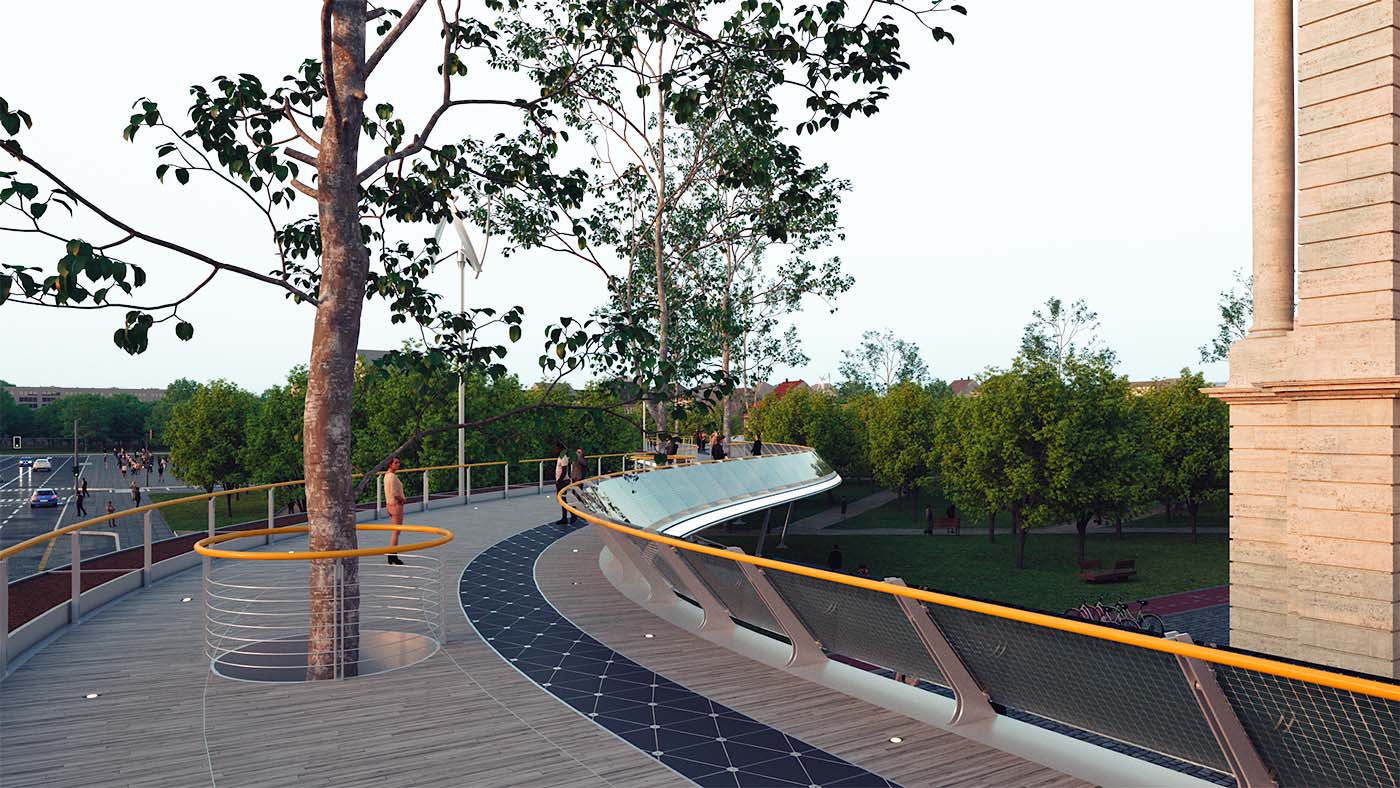
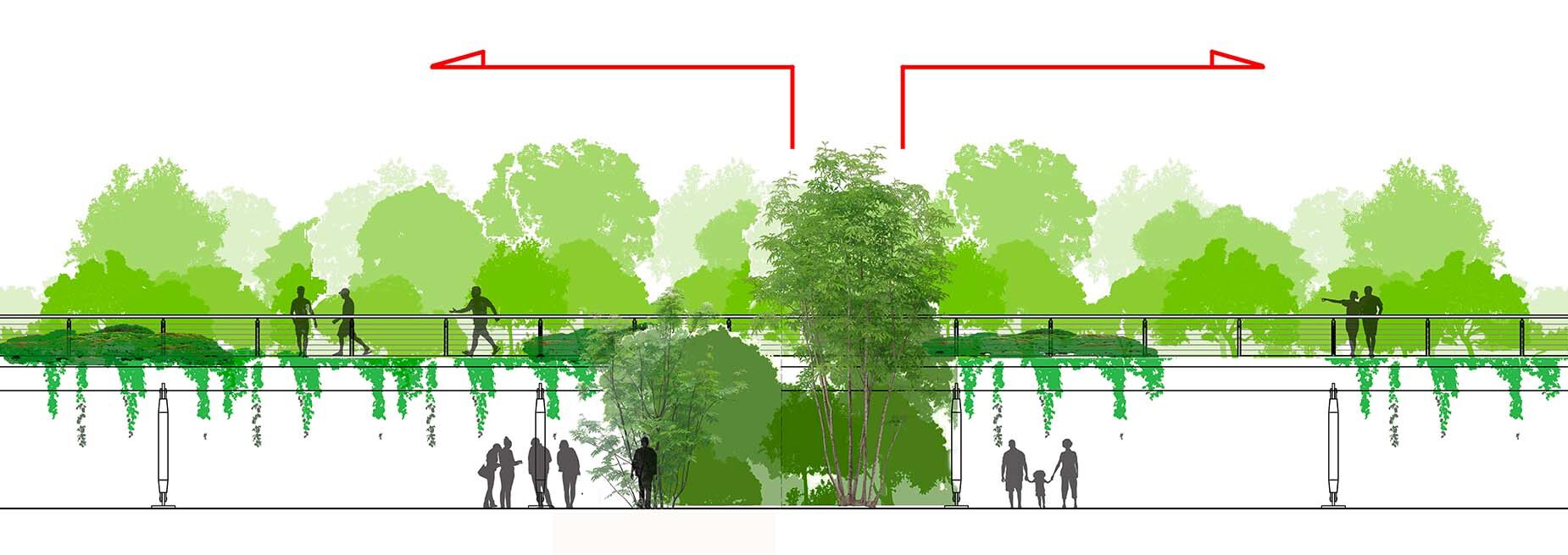
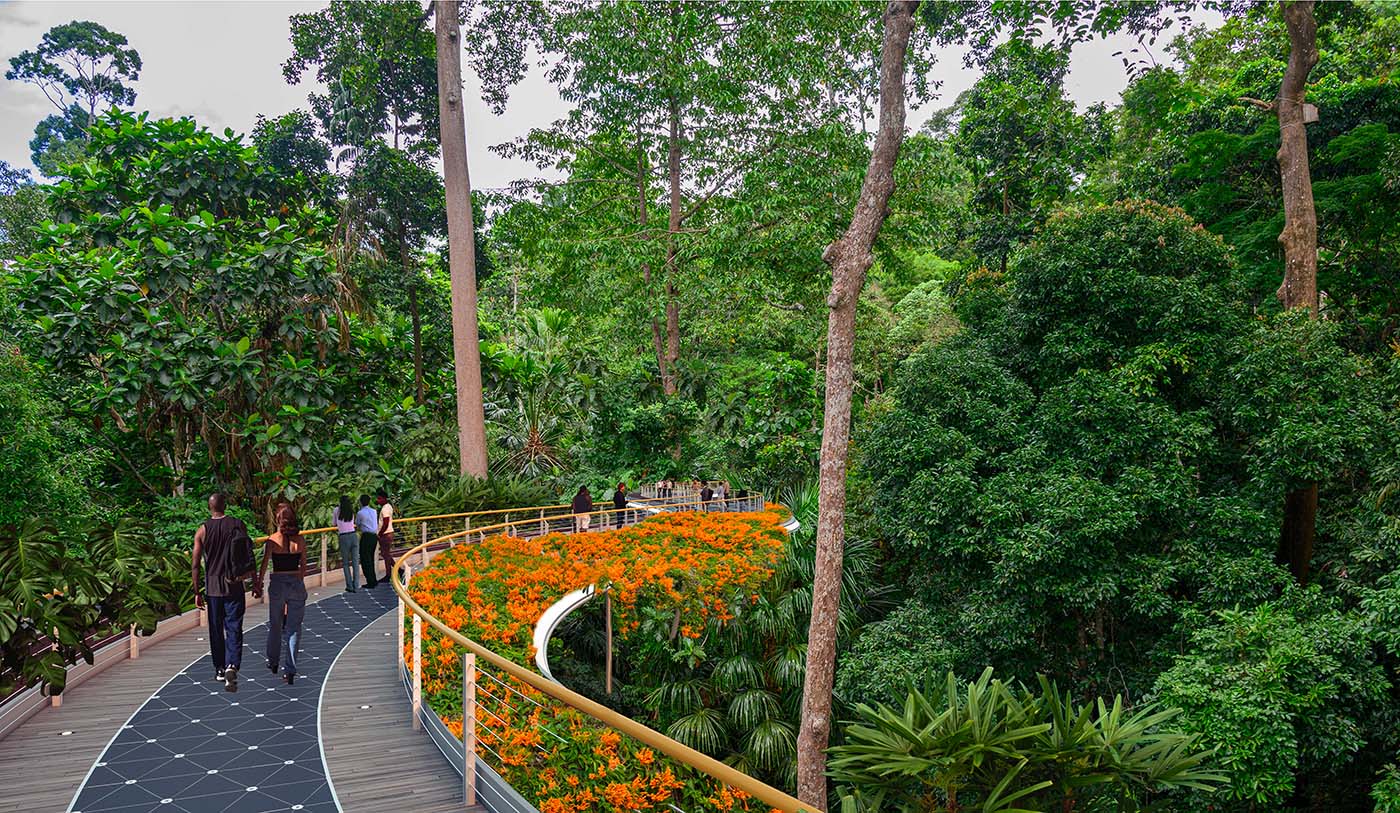
The primary objective of the system is to increase vegetation in urban areas strongly affected by traffic and building densification, allowing greater absorption of CO2 combined with the reduction of pollutants and fine particulates with a simultaneous improvement in the local microclimate.
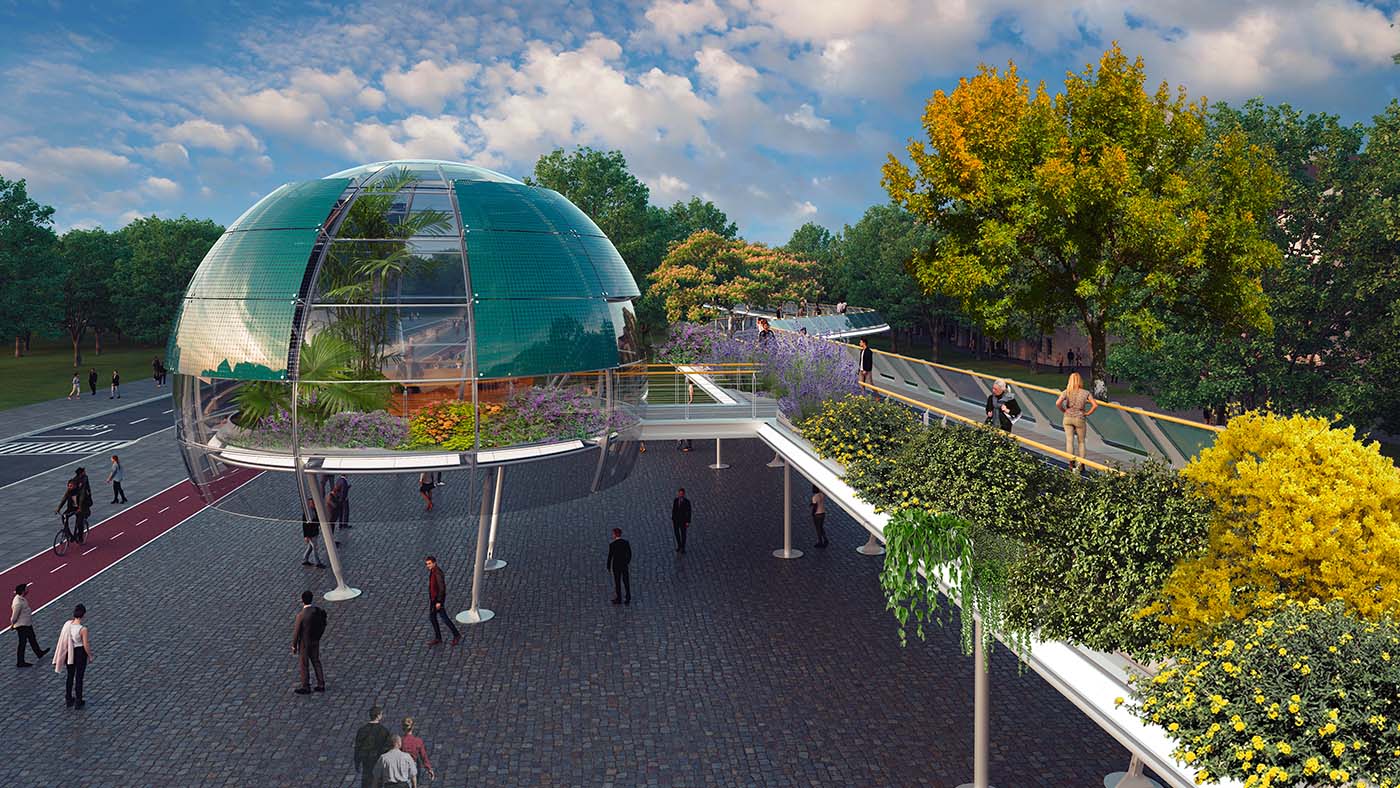
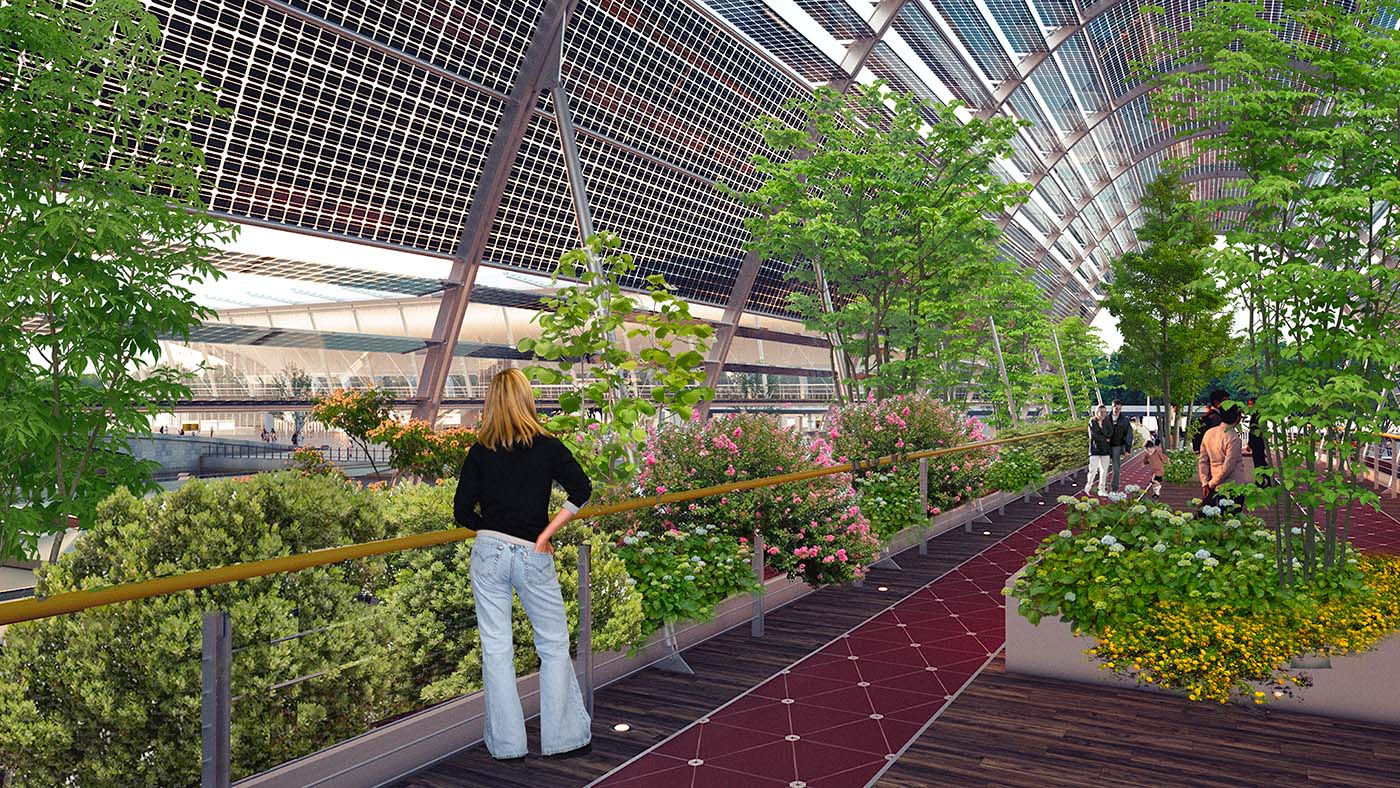
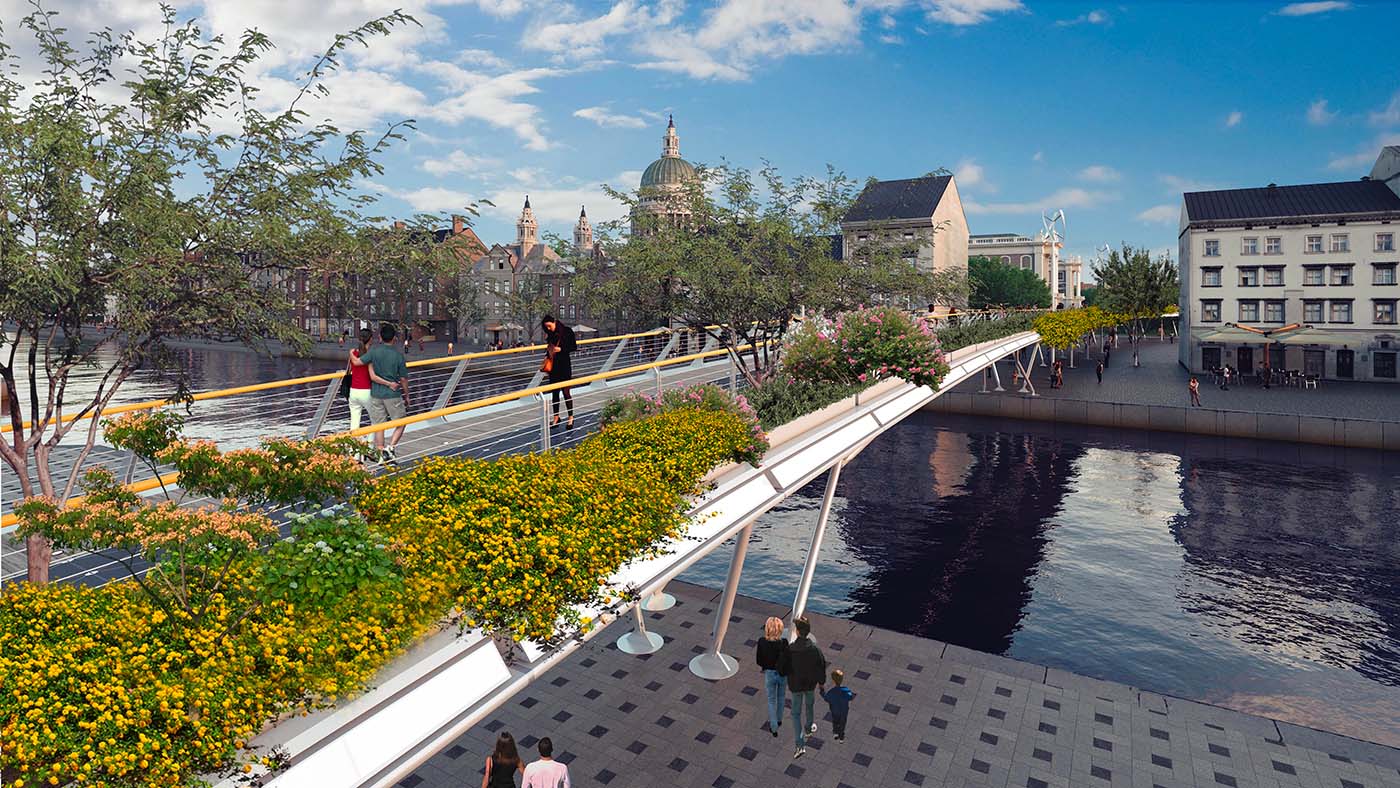
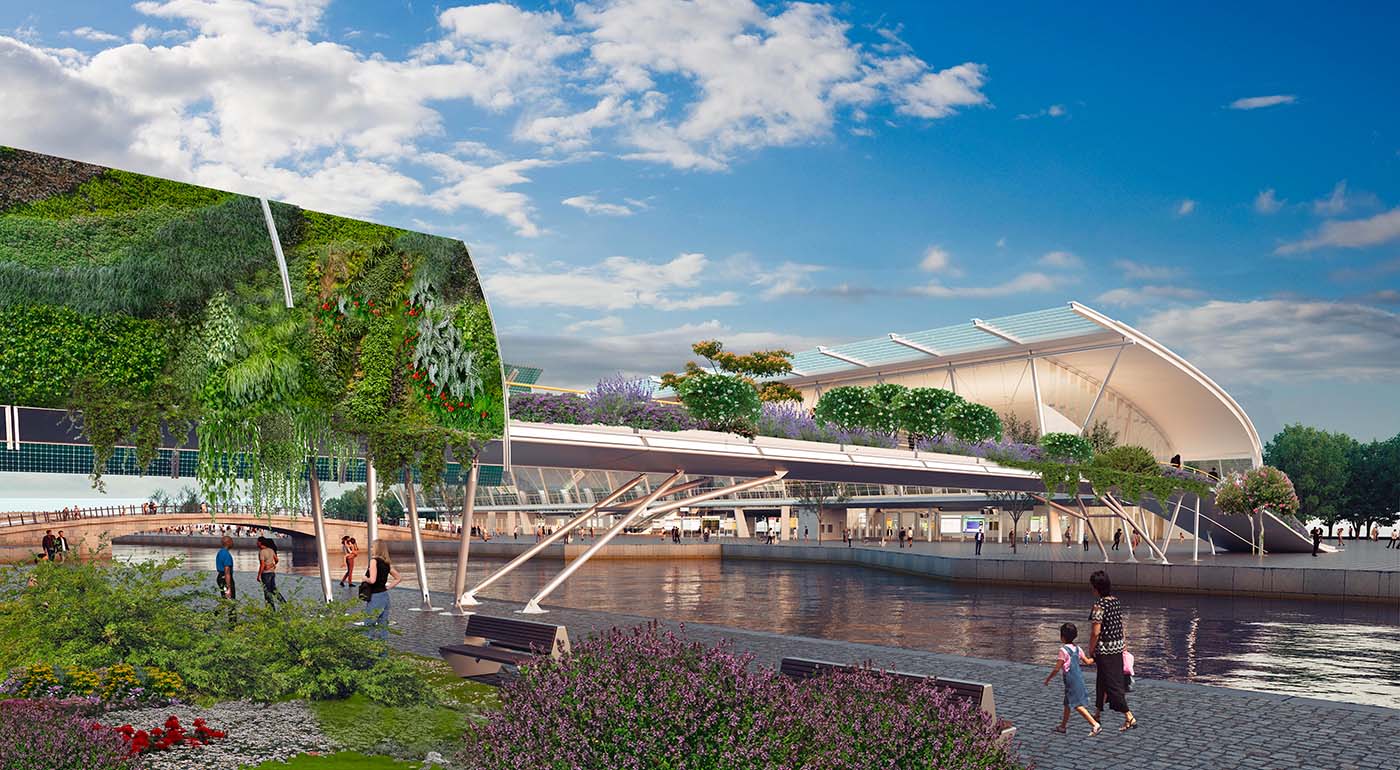
The system has different dimensions in width, with, at times, green roofs, vertical greenery and islands connecting with the ground below. Two types of greenery were used, one with essences and medium-stemmed trees with differentiated seasonal blooms, the other characterized by areas with “moving gardens”, following the philosophy of the botanist Gilles Clément.
«Objective: follow the natural flow of plants, inscribe yourself in the biological current that animates the place and orient it. Don’t consider the plant as a finished object. Don’t isolate it from the context that makes it exist. Result: the game of transformations constantly disrupts the design of the garden (…) gardens should not be judged because of their shape, but rather for their ability to translate a certain happiness of existing.” Gilles Clément
Energy produced on site, stored and redistributed
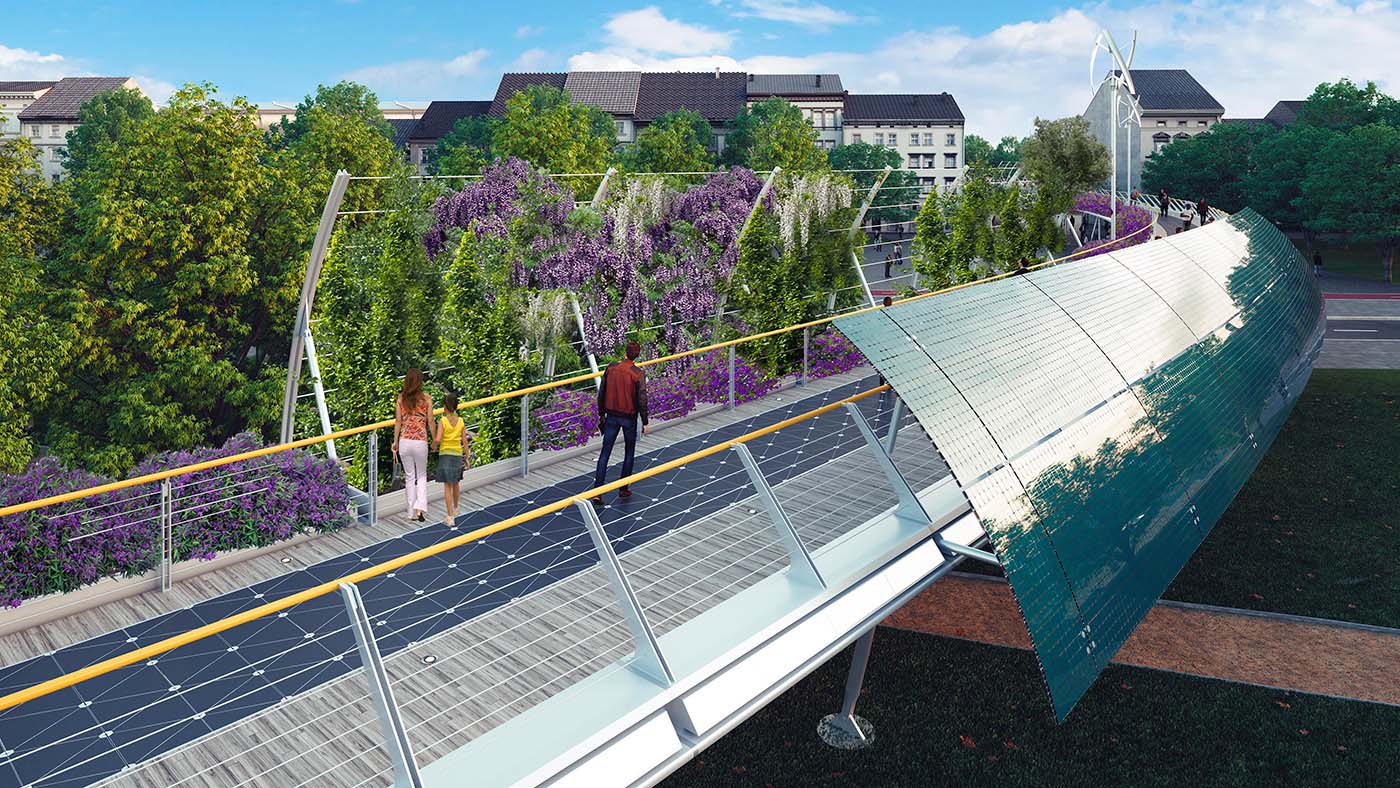
The photovoltaic components, adapted to the routes, are used as needed both as a roofing system and as an acoustic barrier. Piezoelectric paths with smart tiles, inserted into the pavement, create clean electricity using the kinetic energy of pedestrians. Small wind turbines on a vertical axis located in the windy areas, on areas flanking the main roads or along rivers or canals to exploit thermal differences, contribute to the energy production of the system. The routes developed at street level, in addition to freeing the areas from further overbuilding, will guarantee shading, rest and charging areas for every type of electric vehicle.
The system includes small thematic islands to encourage sociality, sometimes impossible on street level, in a climate of urban safety with open-air rest areas, covered areas, refreshment points, spaces for co-working or small events.
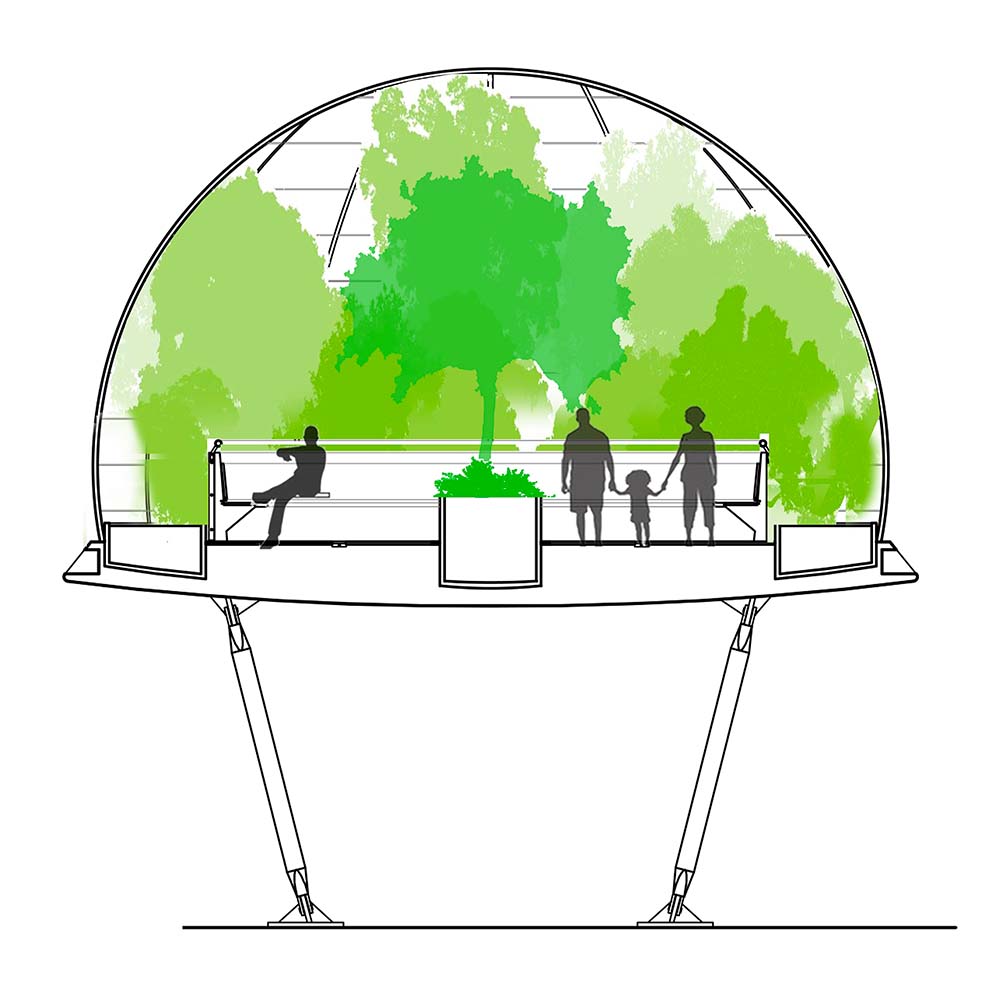
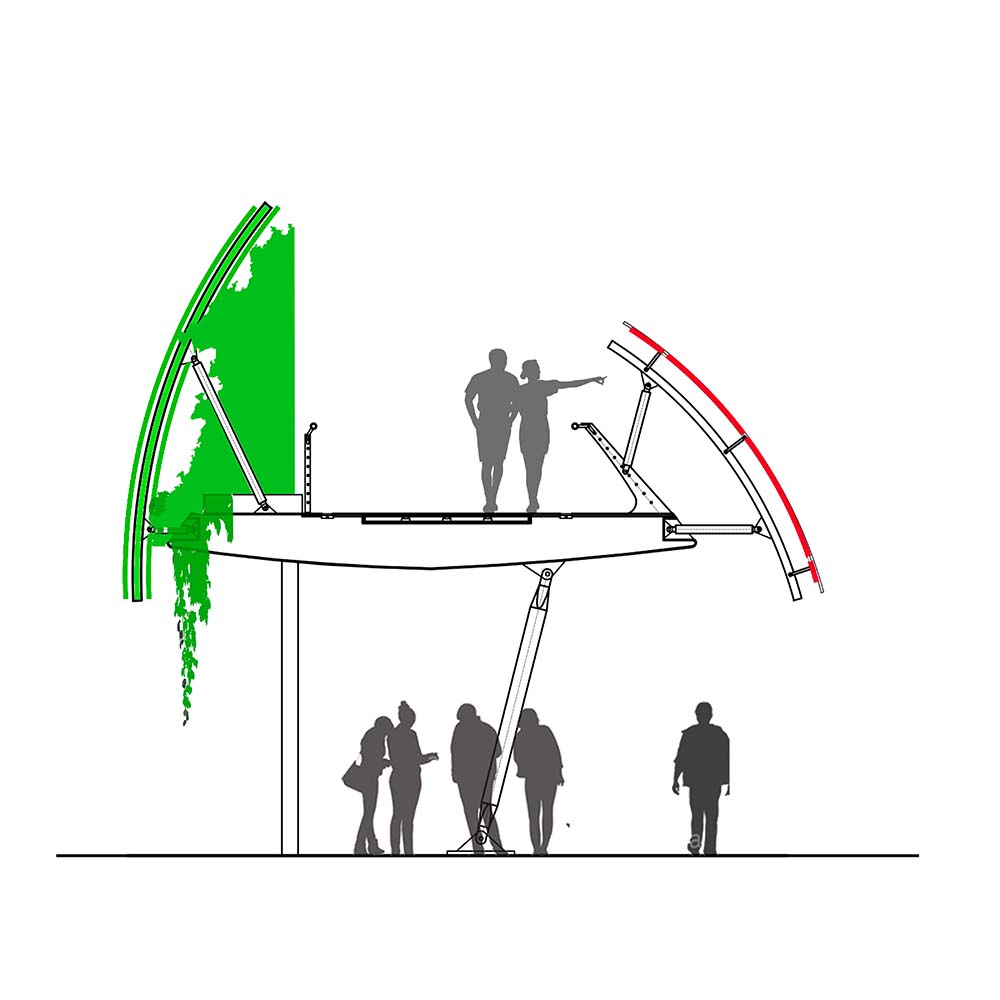
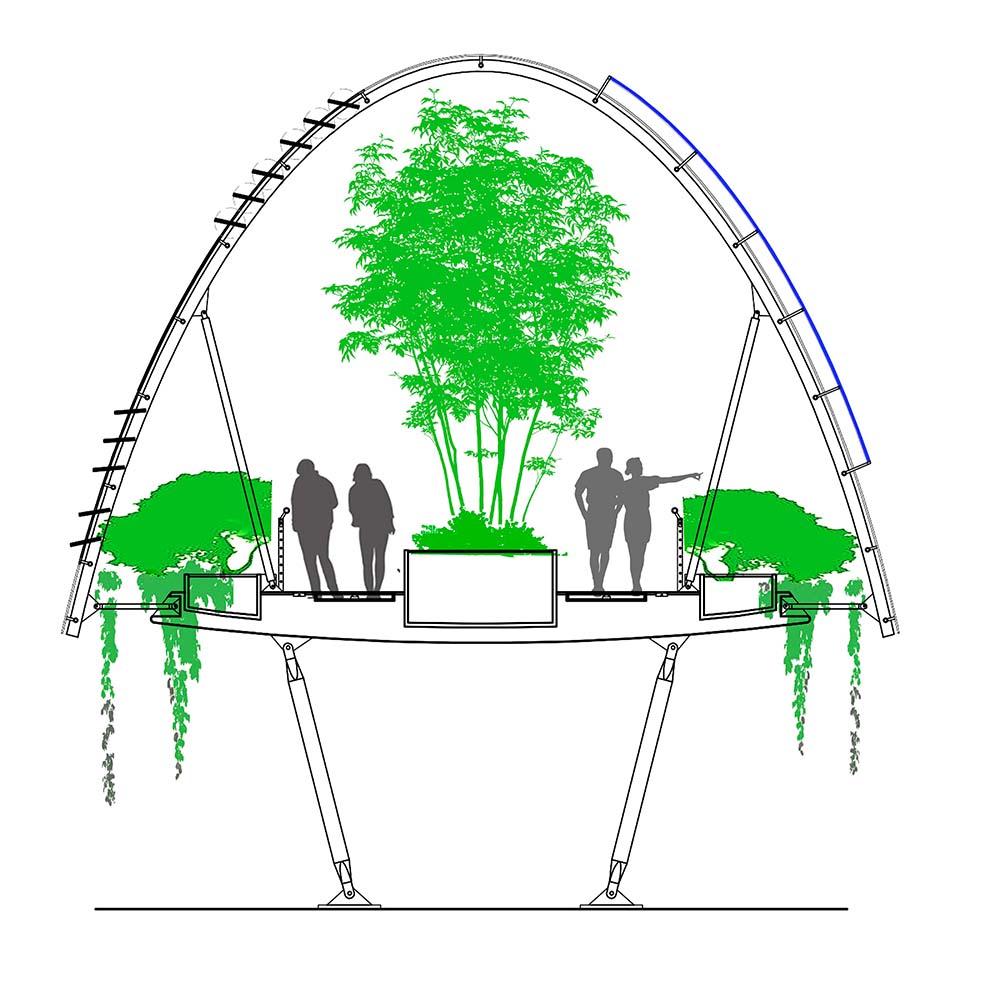
Reconnect what is separate
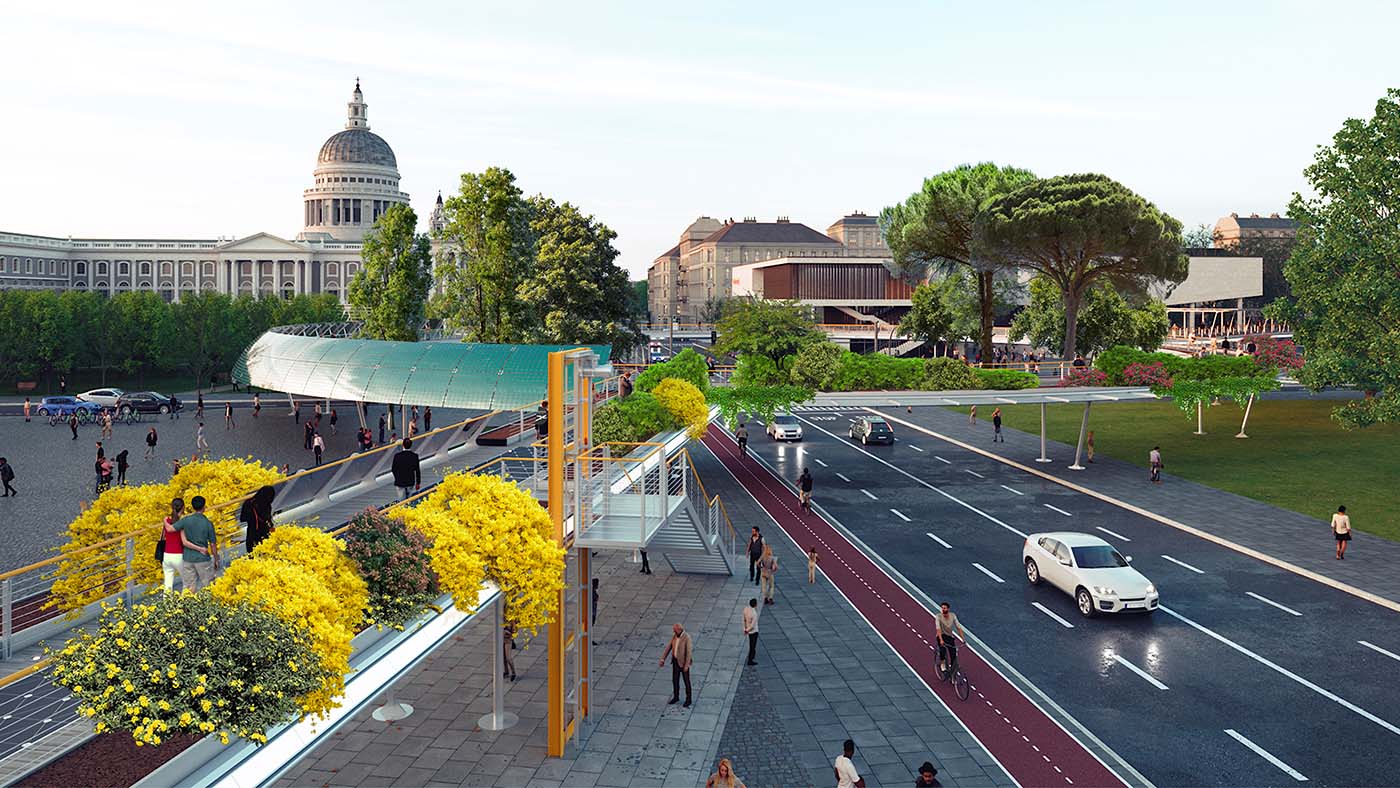
Thanks to its modularity, adaptability and speed of assembly, the system can respond to even critical urban needs, such as overcoming large traffic axes, particularly important intersections, waterways, peripheral arteries, strong differences in height, and be able to trigger a recovery process in degraded areas.