International Center for the Environmental
Date :
2014
Structures :RFR – Paris
Project :Jean Marc Schivo & Lucilla Revelli
Bio-architecture :RFR elements – Paris

International Observatory to study environmental problems
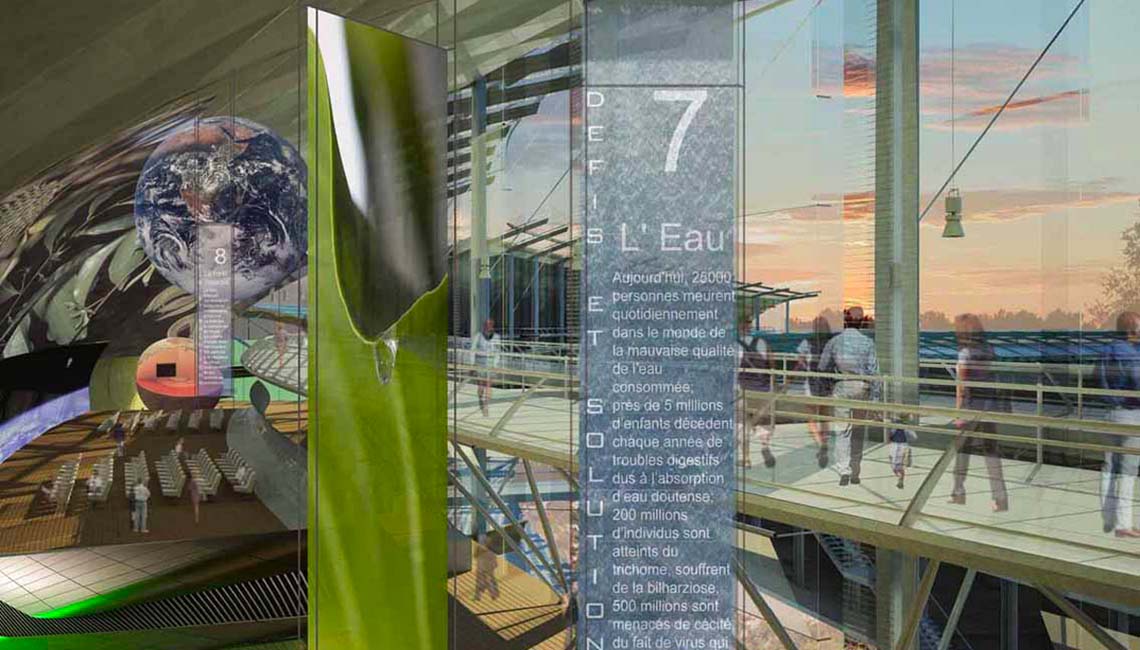
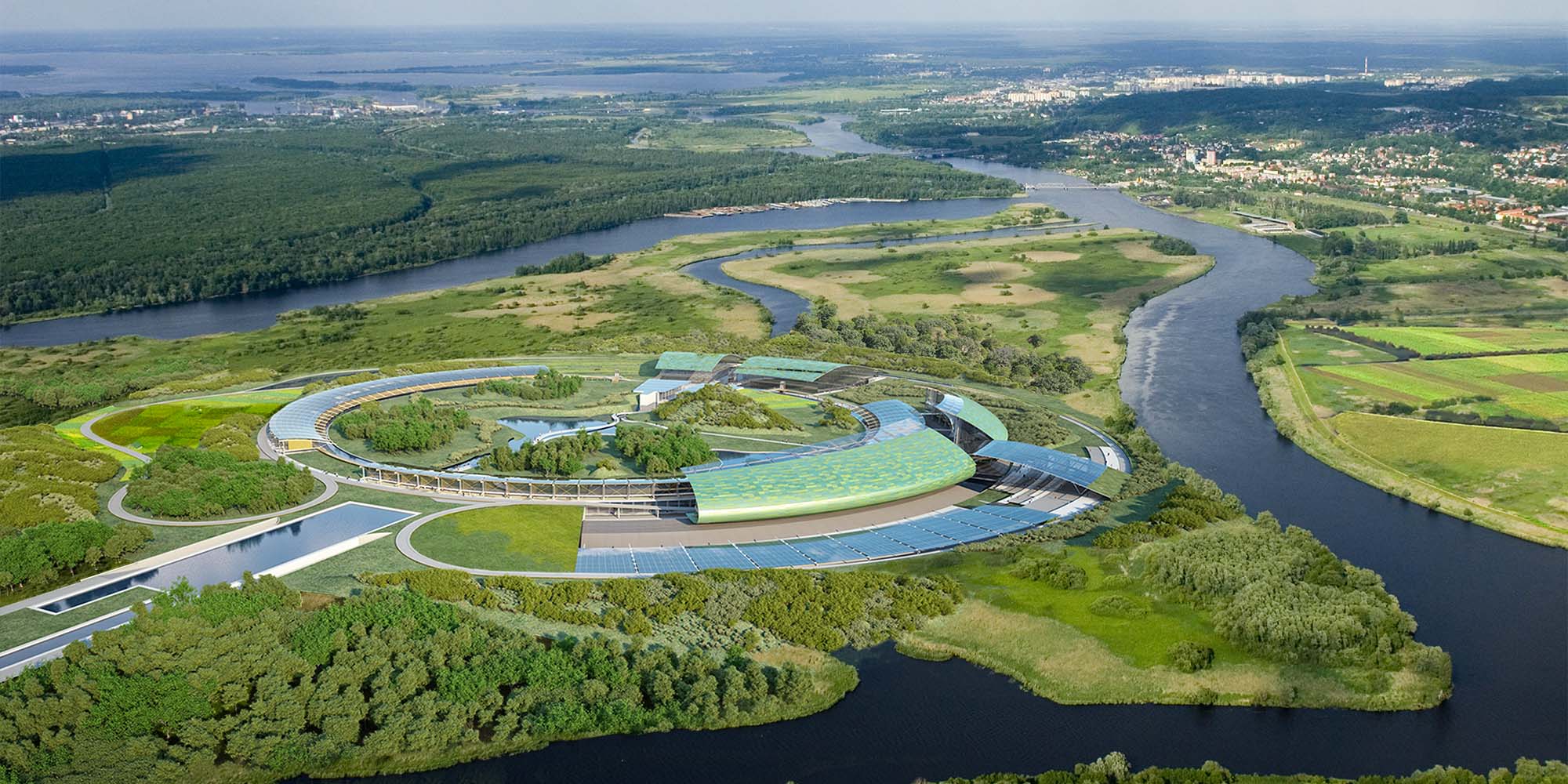
The Centre is created to represent a global symbol in the creation of new strategies dedicated to safeguarding the planet. The idea is to create a larger area for holding special and permanent exhibitions and display activities, and another one, at lower level, devoted to permanent research where a cable and multimedia system updates in real time the most important environmental problems. The units expand and increase in size to form a system with an inside diameter of 300 mt. The entire project tends to experiment a constant relationship of balanced proportions between architecture, nature and productivity.
“Only those who think they have no ties can destroy everything. The spirit of the forest is care”
Davi Kopenawa, Yanomami Shaman
The Centre’s architecture is inspired by the wooden structures of Yanomami Amazon villages and the natural forms of tropical atolls: an allusion to natural elements, communication and lightweight materials. The bearing structural system of the construction units is made of curved beams of laminated wood, specially reinforced at the points of maximum curvature.

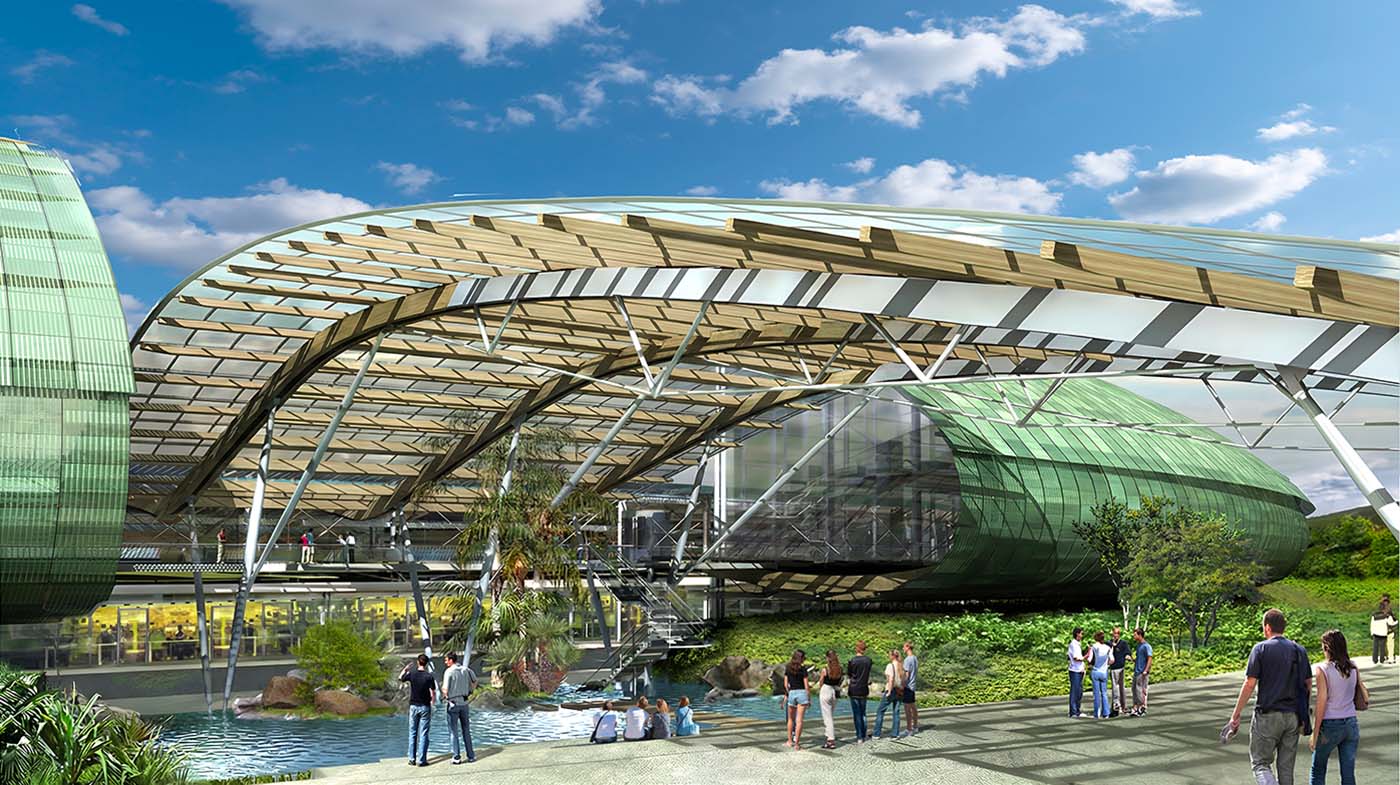
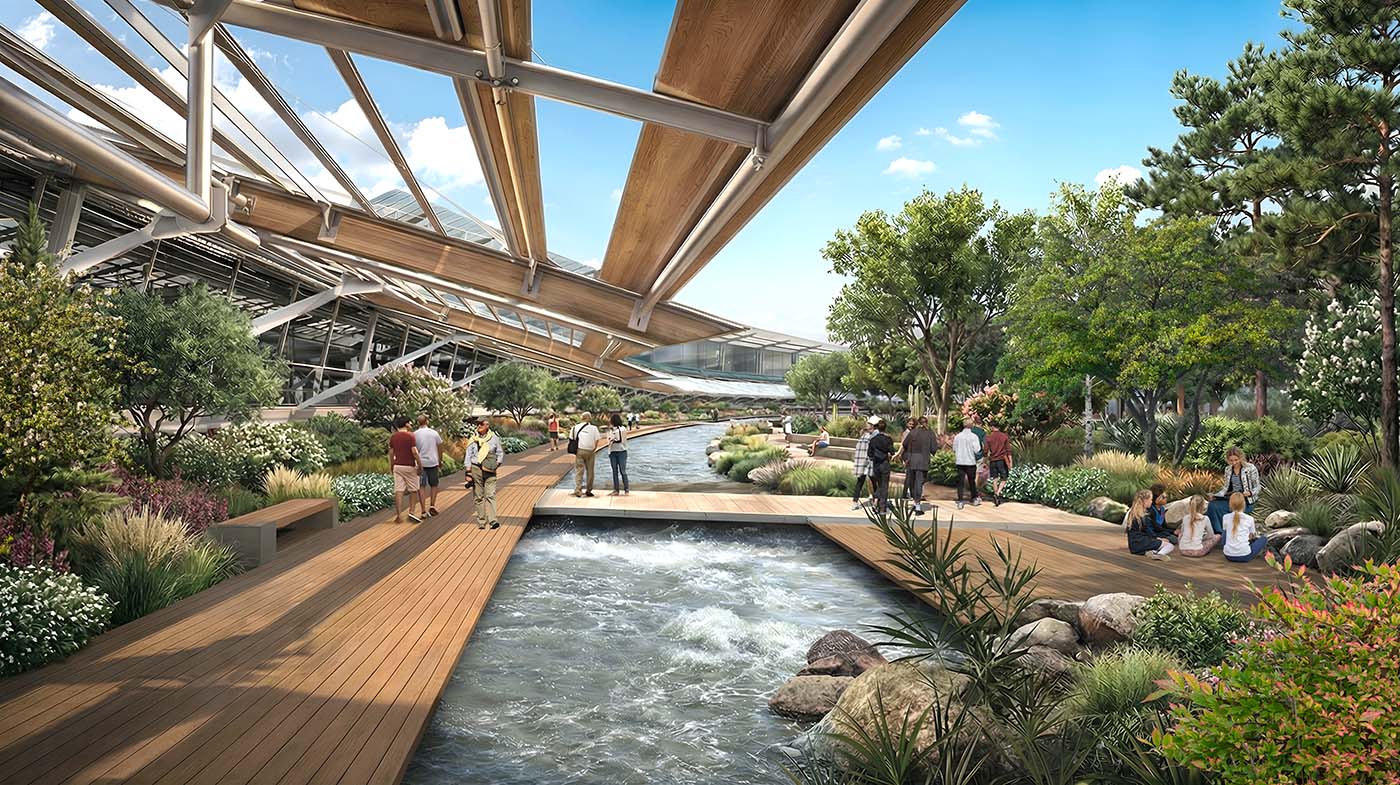
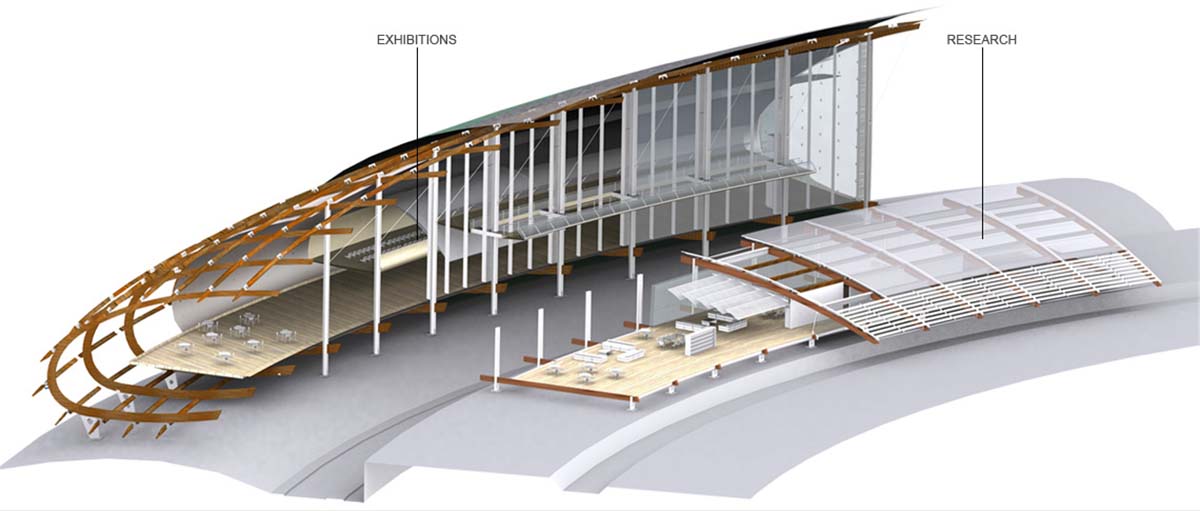
The idea is to create a larger area for holding special and permanent exhibitions and display activities, and another one, at lower level, devoted to permanent research where a cable and multi-media system updates in real time the most important environmental problems.
The units expand and increase in size to form a system with an inside diameter of 300 mt.
The natural lighting system, using glass curtain windows, is controlled by a set of mobile interior curtains and sunscreens. These curtains and screens control the brightness of interior space in relation to exterior sunlight with a special photoelectric cell.
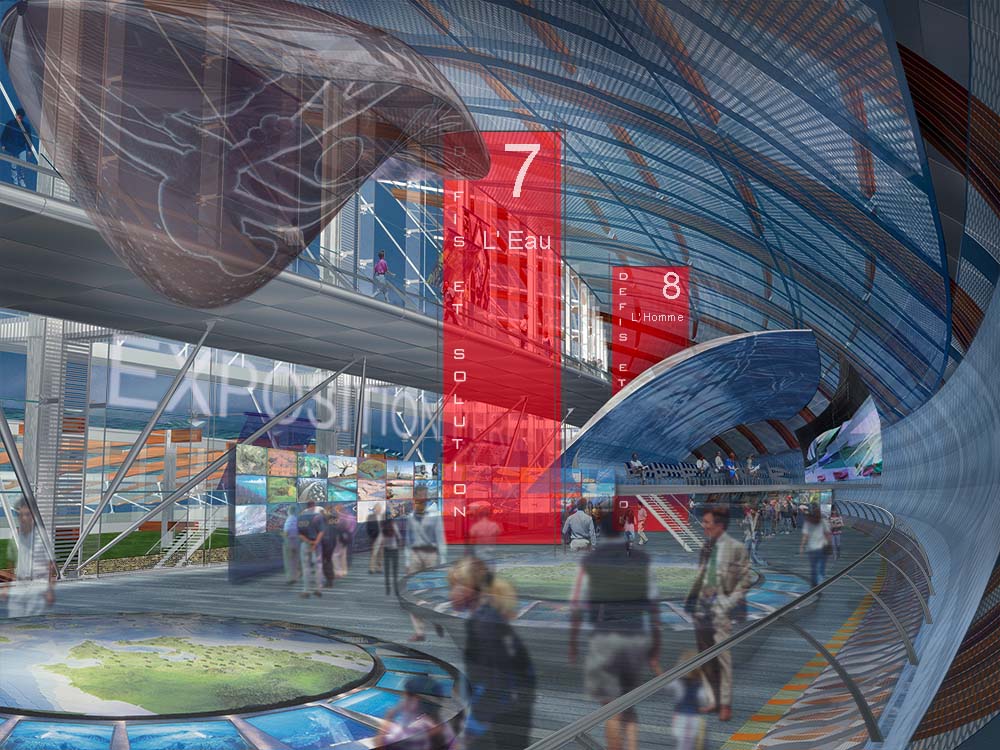

The central park is surrounded by areas for environmental technology research and testing, exhibition areas, the library, the greenhouse of threatened species, the conference centre, and the UNESCO pavilion. The centre’s facilities also include a theme park featuring simulations of environmental balances. From an energy viewpoint, the Centre is a totally self-contained structure entirely self-sufficient in terms of food and energy, thanks to the use of renewable energy and run by an underground technical structure.